
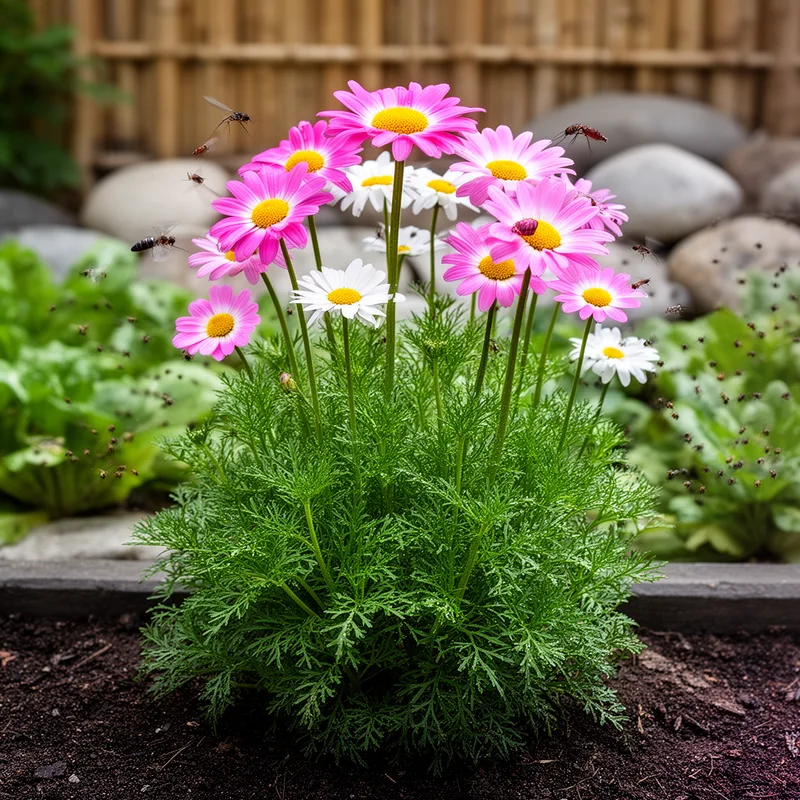
Tanacetum coccineum
- noun
- Specialized
- Gardeners value Tanacetum coccineum both for its beauty and its pest-repelling properties.
Examples
-
The dried flowers of Tanacetum coccineum are used to make natural insecticides.
-
The Tanacetum coccineum blooms beautifully in the summer.
-
Tanacetum coccineum is commonly grown as a border plant for its attractive pink flowers.
-
Have you seen the Tanacetum coccineum in the garden?
-
Tanacetum coccineum is often planted in gardens for its lovely pink flowers and pleasant aroma.
-
Many organic gardeners use Tanacetum coccineum to deter pests while enhancing the garden's beauty.
-
The natural insecticide pyrethrum is extracted from the flowers of Tanacetum coccineum.
Synonyms

A garden plant with divided scented leaves and pink to purple flowers that helps keep insects away

A garden plant from Asia with divided scented leaves and white, pink, or purple flowers that keeps insects away

A plant like a daisy whose flowers people use to make a natural insect spray
Surface Forms
Morphology
Tanacetum + coccineum
This is a Latin binomial: the genus name Tanacetum clearly signals a flowering-plant category, so a learner who knows that constituent can infer it refers to a plant. However, the species epithet 'coccineum' is not specified (and is Latin rather than common English), and the detailed sense in the headword (perennial Asiatic plant with daisy-like flowers and use as pyrethrum) cannot be fully derived from the parts, so the meaning is only partially predictable.
Etymology
Tanacetum coccineum is a name that describes the plant: Tanacetum is the old name for 'tansy', a plant with divided, scented leaves, and coccineum means 'red' in Latin, because of its pink-red daisy flowers. So the name helps you remember it as a red-pink tansy-like plant often grown for its pretty flowers and to keep insects away.

