
Symplocarpus foetidus
- noun
- /sɪmˌplɒkɑːrpəs foʊˈɛtɪdəs/
- Specialized
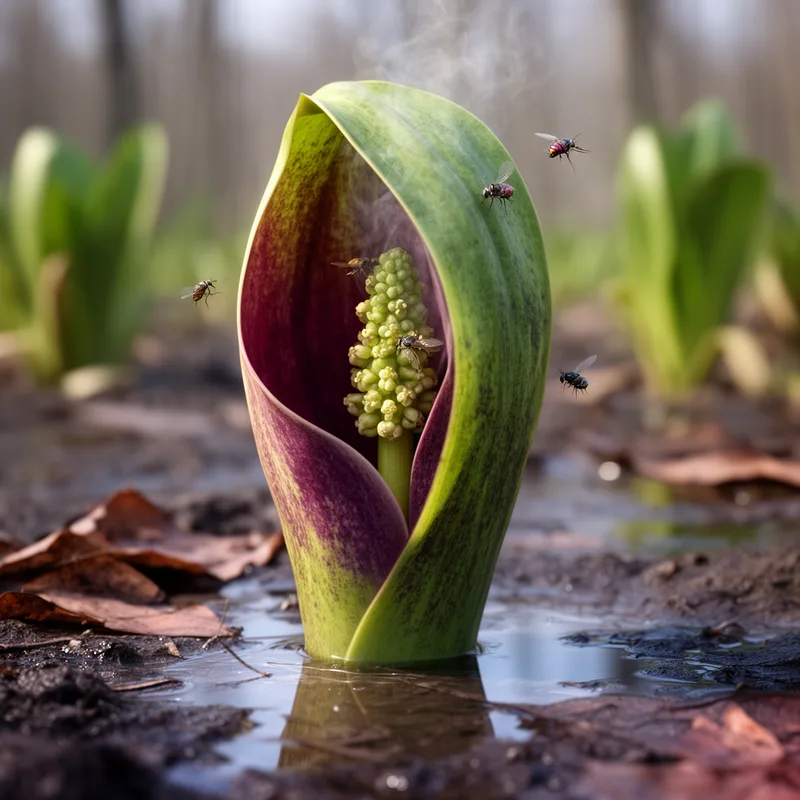
- The spathe of Symplocarpus foetidus is mottled green or purple and blooms before most other plants appear.
Examples
-
Symplocarpus foetidus releases a pungent odor to attract pollinators in early spring.
-
Researchers studied the growth cycle of Symplocarpus foetidus in its natural wetland habitat.
-
Look at that Symplocarpus foetidus!
-
The Symplocarpus foetidus blooms early in the spring.
-
Symplocarpus foetidus emits a strong, unpleasant smell that is often compared to rotten meat.
-
In the wetland, Symplocarpus foetidus can be found thriving among other marsh plants.
-
The flowers of Symplocarpus foetidus are hidden within a mottled spathe, making them difficult to spot.
Synonyms

 1
8.9
1
8.9

A low plant with a strong bad smell that grows in wet places

A small swamp plant with a bad smell and tiny flowers under a spotted green or purple hood

A low-growing swamp plant from eastern North America with a strong bad smell and tiny flowers
Surface Forms
Morphology
Symplocarpus + foetidus
This is a Latin botanical binomial (genus + species). The meaning is compositionally predictable if the learner recognises that Symplocarpus denotes skunk-cabbage-like plants and that the epithet foetidus means 'fetid/foul-smelling' — together denoting a smelly Symplocarpus — but the species epithet is Latin and not a usual English word, so a typical B1 learner would not reliably infer the meaning without prior exposure.
Etymology
Symplocarpus foetidus is a swamp plant that gives off a very strong, bad smell, so people often call it 'skunk cabbage'. Its tiny flowers hide inside a mottled, hood-like leaf and the smell brings insects to the plant to help it make seeds, so the smell explains the plant's name and main feature.