
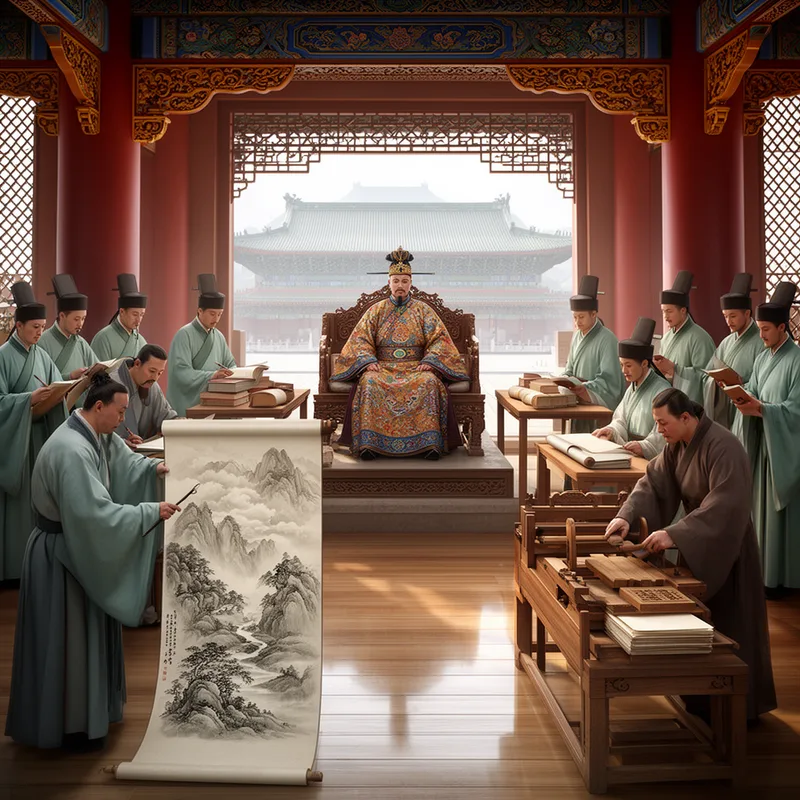
Sung dynasty


 1
8.1
1
8.1
- noun
- /sʌŋ ˈdaɪnəsti/
- This painting was created during the Sung dynasty, showcasing the era's remarkable artistry.
Examples
-
Many architectural advancements were made in the Sung dynasty, influencing later styles in China.
-
I made a saddle after this the Ming dynasty and one after the Sung dynasty with the in size Peony pattern.
-
The Song (Sung) dynasty was established in 960 and ended with the death of its last emperor, Huaizong, in 1279.
Academic text (2017) -
"Ten centuries ago, during the first years of the Sung dynasty, two youthful poets who happened to see some of each other's poems began a correspondence over a dispute concerning prosodic technique.
Fiction book (1997) -
The Sung dynasty is celebrated for its significant contributions to Chinese philosophy and literature.
Synonyms
 45
8.7
45
8.7
A Chinese dynasty that ruled from 960 to 1279, famous for art and inventions
 16
9.1
16
9.1
A Chinese dynasty from 960 to 1279 known for its art and learning
A period in China from 960 to 1279 when a ruling family makes great art and literature
Surface Forms
Morphology
The noun phrase is a direct composition of the proper name 'Sung' and the noun 'dynasty' (a succession of rulers), so a learner who knows both constituents can infer it refers to the imperial dynasty called Sung. This type of name + category construction is cross-linguistically common and therefore immediately comprehensible to B1 learners.
Etymology
Sung dynasty comes from the name 'Song' of the rulers who founded that royal line in China. People use Sung dynasty to mean the whole time those rulers were in charge, so the phrase refers to the art, books, and inventions made then.