
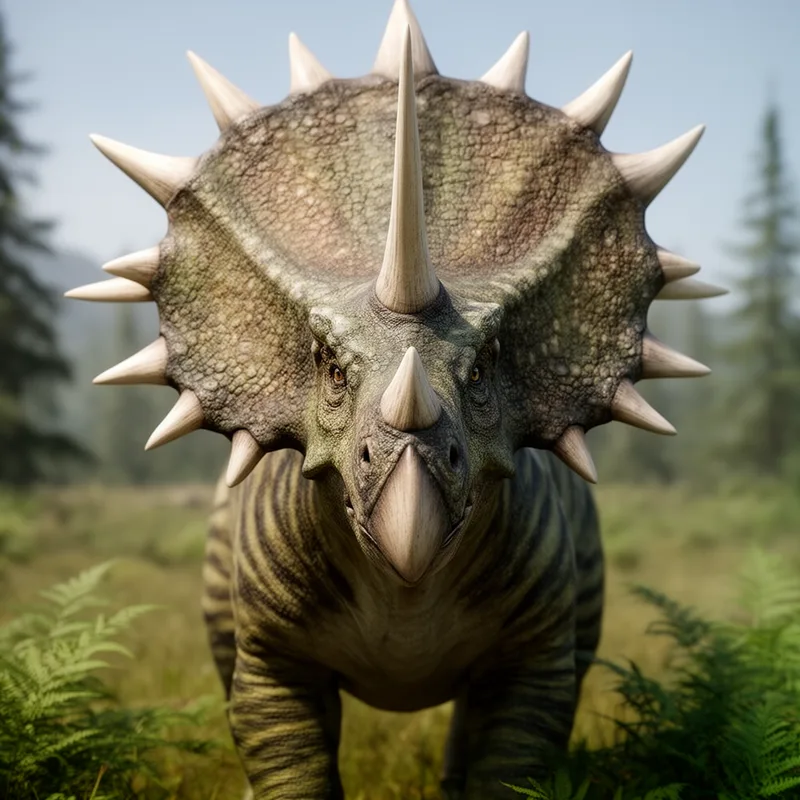
Styracosaurus
- noun
- /ˌstaɪrəˈkoʊsɔrəs/
- Specialized
- During the Late Cretaceous period, the Styracosaurus roamed the earth with its distinctive nasal horn and frill.
Examples
-
Paleontologists believe the Styracosaurus used its impressive horns for defense against predators.
-
It's a styracosaurus of the cretaceous group.
-
Fossils of the Styracosaurus show that it had a large frill decorated with several horns.
Synonyms


 1
9.9
A large horned dinosaur with one long nose horn and many big spikes on the edge of its head plate
Surface Forms
Morphology
Styracosaurus = styraco + saurus
This is a classical scientific coinage with the dinosaur element 'saurus', but the first element is not a productive or familiar English morpheme for most learners.
Etymology
Styracosaurus comes from the Greek part styrakos meaning 'spike' and -saurus meaning 'lizard', the same -saurus you see in dinosaur. It was named for its big horn and the long spikes on its frill, so the name helps you picture a 'spike lizard'.