
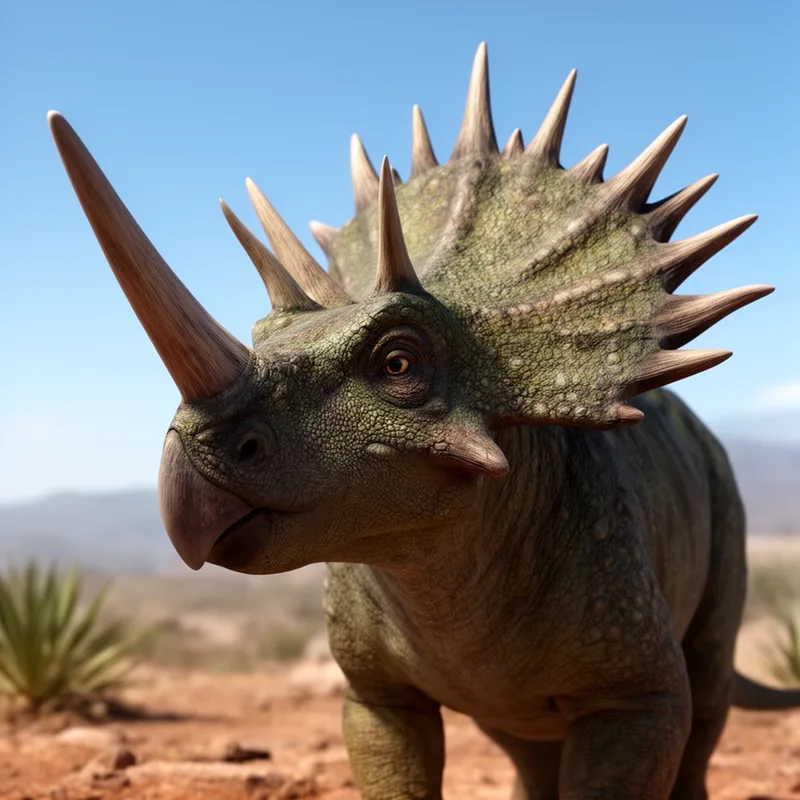
styracosaur


 1
9.9
- noun
- /ˈstɪrəkəˌsɔr/
- Specialized
- Scientists believe the styracosaur used its impressive horns for defense against predators.
Examples
-
The museum's exhibit features a life-sized replica of a styracosaur skeleton.
-
A fossilized styracosaur skull was discovered in Alberta, shedding new light on its evolutionary history.
-
The styracosaur is a fascinating dinosaur.
-
Did you know that the styracosaur had a long nose horn?
-
A fossilized styracosaur skull was discovered in Alberta, shedding new light on its evolutionary history.
-
Scientists believe the styracosaur used its impressive horns for defense against predators.
-
The museum's exhibit features a life-sized replica of a styracosaur skeleton.
Synonyms
 1
9.9
A four-legged plant-eating dinosaur with a large beak, horns, and a bony frill on the head
 1
7.9
A four-legged plant-eating dinosaur with a beak, horns, and a frill like Triceratops
 1
9.9
A large plant-eating dinosaur with a frill of spikes and a long horn on its nose
Surface Forms
Morphology
styracosaur = Styracosaurus (opaque) = styraco + saur
The English name is a shortened form of the scientific genus name and the classical combining elements are not productive or transparent to average learners.
Etymology
The word styracosaur comes from Greek words styrax 'spike' and sauros 'lizard', and the saur part is the same as in dinosaur. So a styracosaur is a 'spike-lizard', which matches its long nose horn and the large spikes around its bony frill.