

Spinacia oleracea
- noun
- Specialized
- The scientific classification for spinach is Spinacia oleracea.
Examples
-
Spinacia oleracea is commonly grown in home gardens for its edible leaves.
-
I love to eat Spinacia oleracea in salads.
-
Researchers studied the nutritional value of Spinacia oleracea compared to other leafy greens.
-
Did you know that Spinacia oleracea is high in iron?
-
Spinacia oleracea is rich in vitamins and is often included in healthy diets.
-
Many chefs prefer using Spinacia oleracea for its fresh flavor in various dishes.
-
When cooked, Spinacia oleracea wilts down significantly, making it a great addition to soups.
Synonyms
 94
1.0
94
1.0

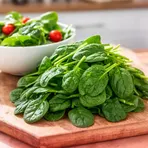
A green leafy vegetable eaten raw or cooked
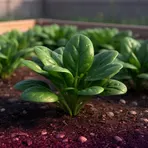
A garden plant with dark green leaves that people eat

A leafy green plant with small prickly seeds that people grow for its tender dark leaves used in cooking
Surface Forms
Morphology
Spinacia + oleracea
This is a Latin binomial (scientific) name rather than a normal English phrase; its meaning ('spinach') is conventional and taxonomic rather than compositionally derived from everyday English words. Even if a learner knew 'Spinacia' as a genus, B1 learners will not reliably infer the common-food meaning from these Latin elements, so the expression is not transparently interpretable.
Etymology
Spinacia oleracea comes from old Latin words used for plants: Spinacia became our word 'spinach' and oleracea means 'from the garden' or 'edible plant'. So Spinacia oleracea is simply the formal name for the leafy green 'spinach' we eat.