
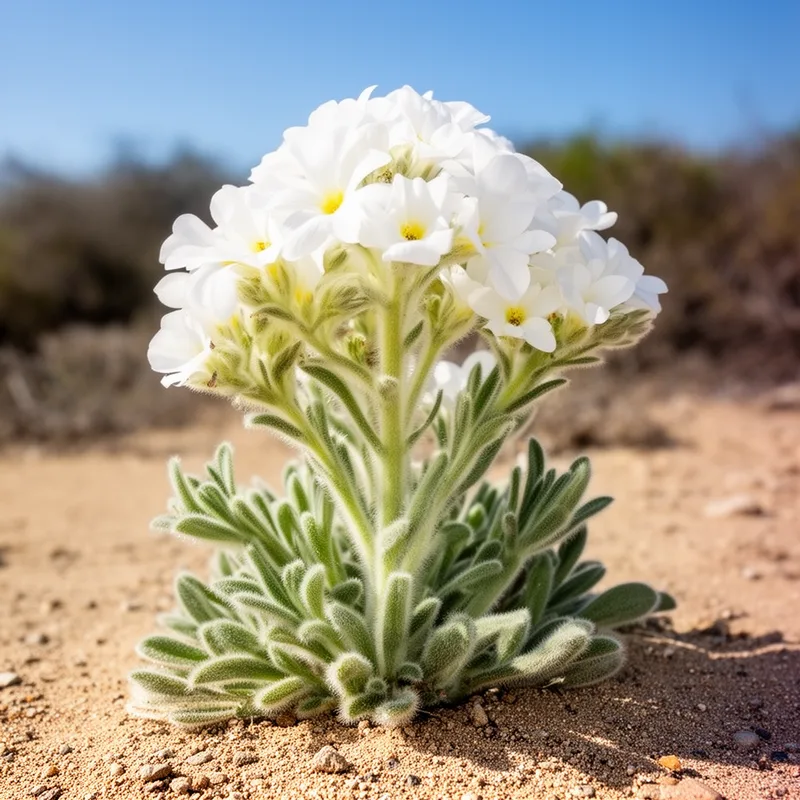
Sphacele calycina
- noun
- Specialized
 :
Sphacele calycina
:
Sphacele calycina
- The fuzzy stems and white blooms make Sphacele calycina easy to identify in the wild.
Examples
-
Botanists collected several specimens of Sphacele calycina during the spring flowering season.
-
Sphacele calycina thrives in the dry, sandy soils of coastal California.
-
The Sphacele calycina thrives in California's coastal regions.
-
Many gardeners appreciate the beauty of Sphacele calycina.
-
Sphacele calycina is known for its stunning white flowers and woolly leaves in California gardens.
-
During their study, the researchers were amazed at how well Sphacele calycina adapted to the local climate.
-
You can find Sphacele calycina growing abundantly along the coastal bluffs of California.
Synonyms

A plant from California that lives for many years with woolly stems and large white flowers called pitcher sage
Surface Forms
Morphology
Sphacele + calycina
This is a Latin scientific binomial rather than an English idiom or compositional phrase, so its label ('Sphacele calycina') does not convey a predictable meaning from everyday English words. The constituents are taxonomic/technical (and one element is not found in common dictionaries), so a B1 learner who knows ordinary English vocabulary would not be able to derive the plant description without botanical or Latin knowledge.
Etymology
The plant name Sphacele calycina comes from old plant words that describe how it looks: Sphacele points to its woolly stems and leaves, and calycina comes from the word 'calyx', meaning the little 'cup' that holds the flower. That's why the name helps you picture a woolly plant with a white flower 'cup'.

