
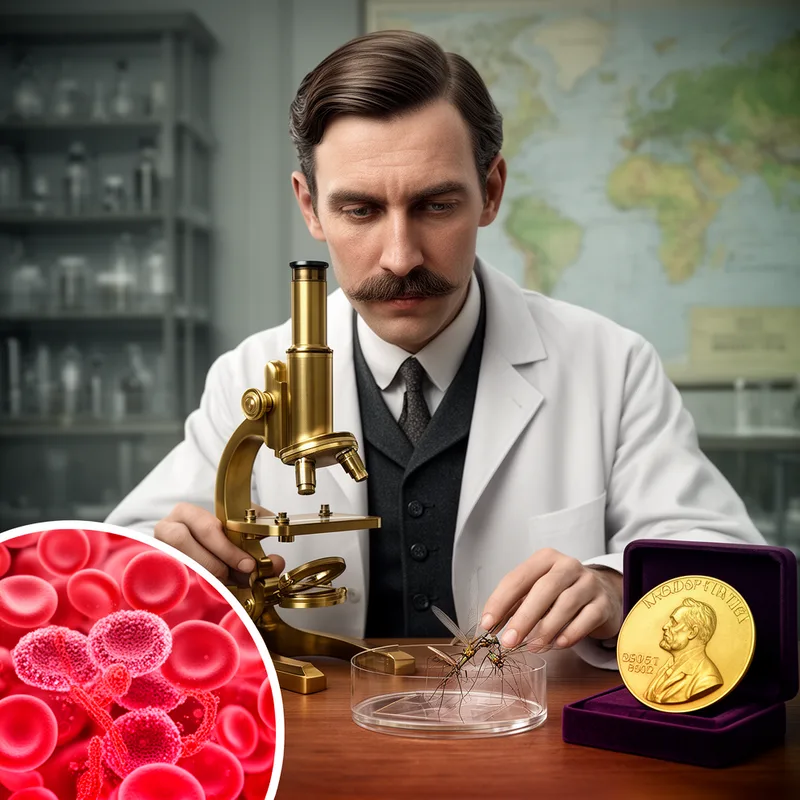
Sir Ronald Ross


 1
7.0
- proper noun
- Research into malaria changed dramatically after Sir Ronald Ross identified mosquitoes as the disease’s vector.
Examples
-
Sir Ronald Ross was awarded the Nobel Prize in 1902 for his groundbreaking discovery about malaria.
-
Sir Ronald Ross won the Nobel Prize in 1902.
-
The legacy of Sir Ronald Ross continues in modern tropical medicine.
-
The work of Sir Ronald Ross was groundbreaking.
-
Sir Ronald Ross was awarded the Nobel Prize in Physiology or Medicine in 1902 for discovering that mosquitoes transmit malaria.
-
Many modern studies on malaria build on the research conducted by Sir Ronald Ross in the early 20th century.
-
Sir Ronald Ross's discovery about malaria has saved countless lives and changed public health measures worldwide.
Surface Forms
Morphology
Sir + Ronald + Ross
The phrase is a proper name where 'Sir' clearly signals an honorific and that the string refers to a person, so learners who know the parts will infer it names a titled individual. However, the specific biographical facts (that he discovered mosquito transmission of malaria and won a Nobel Prize) are not derivable from the constituents and require world knowledge or exposure.
Etymology
Sir Ronald Ross is remembered for a striking discovery: he watched tiny mosquitoes under the microscope and found they carried the malaria parasite. By showing these insects could 'spread' malaria, he changed how people fought the disease and won the 'Nobel Prize'.