
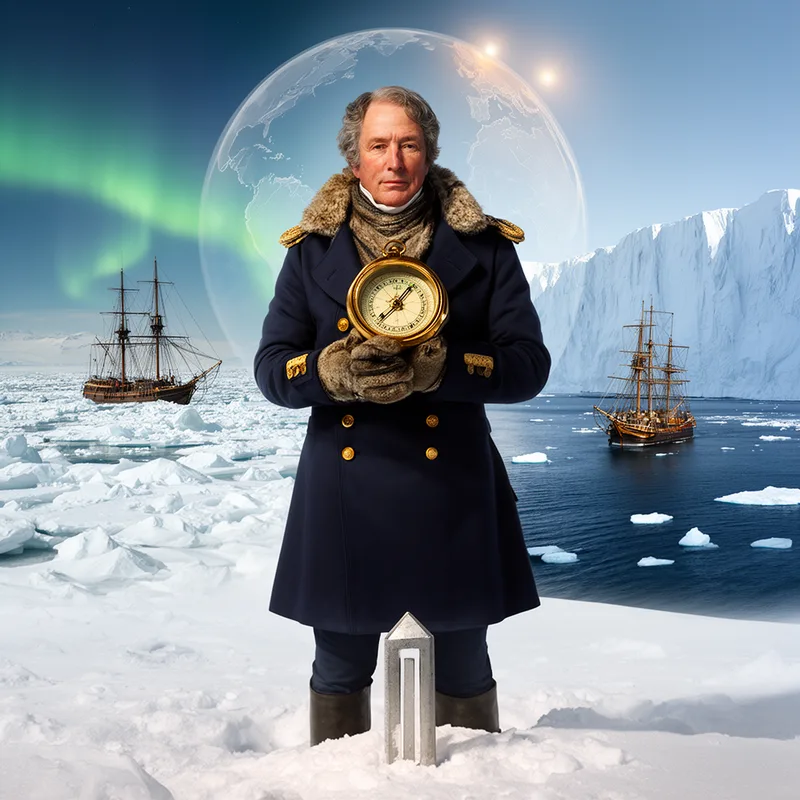
Sir James Clark Ross


 1
8.6
- proper noun
- Sir James Clark Ross is renowned for his discovery of the North Magnetic Pole in 1831.
Examples
-
The Ross Sea in Antarctica was named after Sir James Clark Ross following his expedition.
-
Few explorers have matched the achievements of Sir James Clark Ross in both the Arctic and Antarctic.
-
Oh, Sir James Clark Ross is one of my favorite historical figures!
-
The famous explorer Sir James Clark Ross was known for his expeditions.
-
Sir James Clark Ross is renowned for his discovery of the North Magnetic Pole in 1831.
-
Few explorers have matched the achievements of Sir James Clark Ross in both the Arctic and Antarctic.
-
The Ross Sea in Antarctica was named after Sir James Clark Ross following his expedition.
Synonyms
 1
7.4
A British explorer who led polar expeditions and found the north magnetic pole
Surface Forms
Morphology
Sir + James + Clark + Ross
This is a proper name composed of a title plus personal names; knowing 'Sir' and the name components only signals that this is a honored person but gives no information about who he was, his dates, or his achievements. The specific identity and biographical meaning (British Arctic/Antarctic explorer, located North Magnetic Pole, discovered Ross Sea) cannot be derived from the constituent words, so a B1 learner who only knows the parts would not understand the MWE's referent or meaning.
Etymology
Sir James Clark Ross was a British explorer in the 1800s who sailed into the Arctic and Antarctic. He found the North Magnetic Pole in 1831 and discovered the Ross Sea, so his name is used for places and ships and now stands for the explorer who mapped the polar regions.