
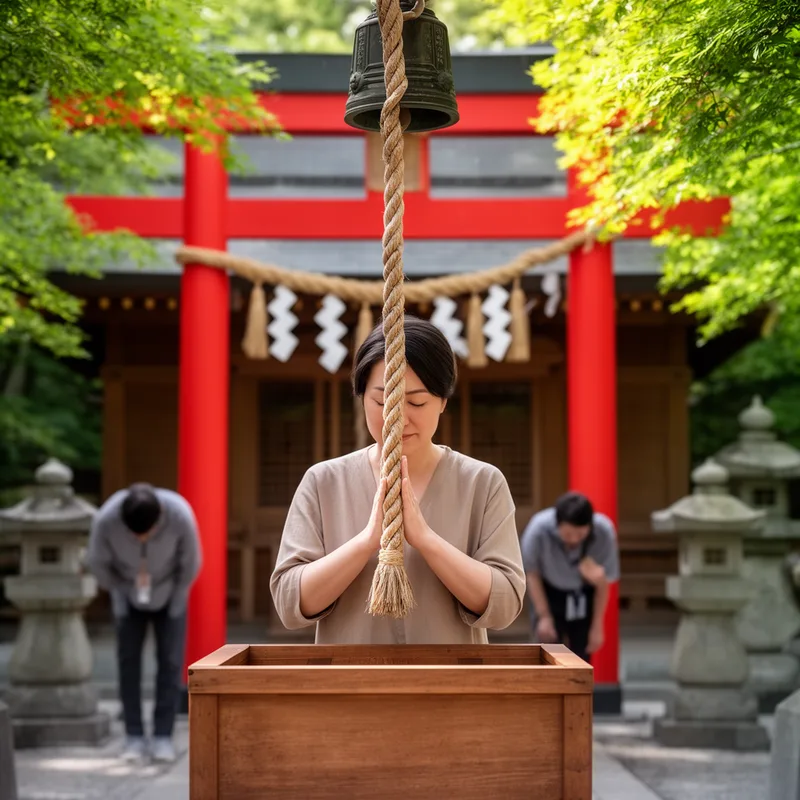
Shintoist


 1
8.9
- noun
- /ˈʃɪnˌtoʊɪst/
- During the festival, many Shintoists gathered to celebrate and pay respect to their ancestors.
Examples
-
Shintoist.
-
"Don't you worry: All Christians, Muslims, or Shintoists among the settlers have to be evicted as well.
Blog text (9) -
What little opposition there was in Japan in the 1930s to imperial policies came from Christians and Communists, not from Buddhists or Shintoists or Confucians.
Academic text (2014) -
As I elaborated elsewhere (Ohnuki-Tierney 1984), most Japanese today are at least nominally both Buddhist and Shintoist simultaneously and usually without personal conviction.
Academic text (1991) -
The Shintoist practices rituals that honor kami, the spirits found in natural objects.
-
As a Shintoist, she believes that everything in nature is imbued with spiritual significance.
Surface Forms
Morphology
Shintoist = Shinto (transparent) = Shinto + ist
Built from the religion name 'Shinto' plus the common agentive suffix '-ist' to mean 'a person who practices or believes in Shinto'; the relation is directly transparent.
Etymology
The word Shintoist comes from the Japanese Shintō, which means 'the way of the gods', with shin meaning 'god' or 'spirit' and tō meaning 'way'. The ending -ist is like in artist or dentist and means 'a person who practices', so a Shintoist is someone who follows Shinto.