
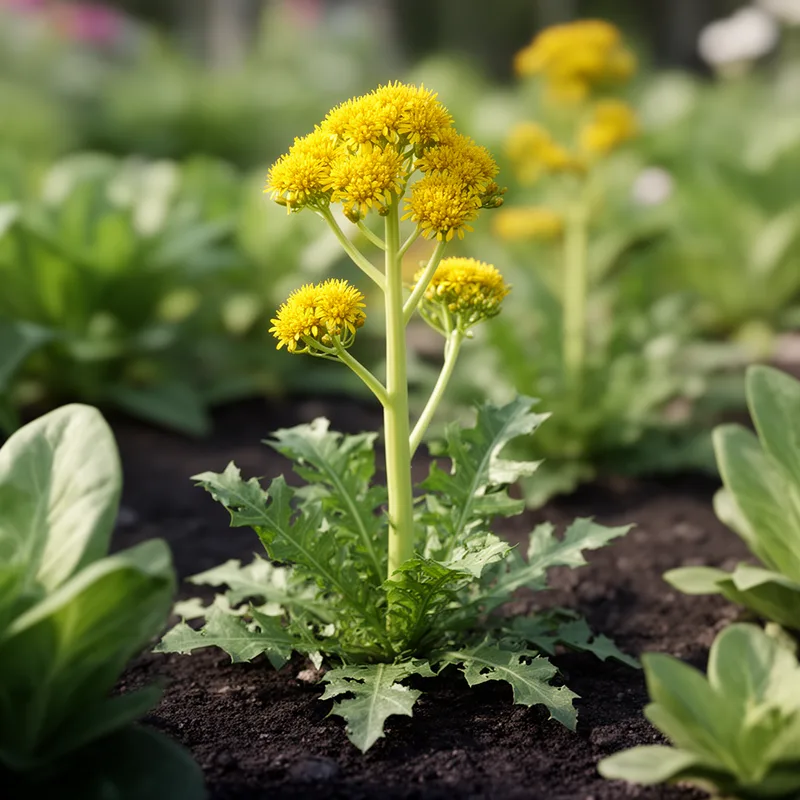
Senecio vulgaris
- noun
- Specialized
- You can identify Senecio vulgaris by its small yellow flowers and deeply lobed leaves.
Examples
-
Senecio vulgaris often invades gardens and fields, making it a persistent weed for many gardeners.
-
Researchers studied the spread of Senecio vulgaris in different soil types across Europe.
-
Look at Senecio vulgaris!
-
The Senecio vulgaris is here.
-
Senecio vulgaris is often seen growing in abandoned lots, showcasing its resilience as a common weed.
-
Gardeners struggle with Senecio vulgaris because it quickly spreads in disturbed soil.
-
You might notice Senecio vulgaris blooming with its bright yellow flowers during the summer months.
Synonyms


 1
9.1
1
9.1
A common small plant with yellow flowers that grows wild in gardens
Surface Forms
Morphology
The binomial is compositionally formed from the genus name 'Senecio' and the Latin epithet 'vulgaris' meaning 'common' or 'widespread', so the phrase denotes the common/widespread species of Senecio and this meaning is directly derivable from the parts. Linnaean scientific names follow a regular, cross-linguistic pattern, so a learner who knows both constituents can infer the MWE's referent.
Etymology
Senecio vulgaris comes from Latin. Senecio means 'old man' because the plant's seed heads have soft white hairs that look like an old man's beard, and vulgaris means 'common', so the name points to its fluffy seeds and to the fact that it is a very common weed.