

Sedum rosea
- noun
- Specialized
- Gardeners admire Sedum rosea for its attractive pink-tipped foliage and bright flowers.
Examples
-
The Sedum rosea grows abundantly in alpine regions across Europe and Asia.
-
Traditional remedies sometimes use extracts from Sedum rosea roots.
-
Look at this beautiful Sedum rosea!
-
I found a beautiful Sedum rosea in the garden.
-
Gardeners admire Sedum rosea for its attractive pink-tipped foliage and clusters of yellow flowers.
-
The Sedum rosea grows abundantly in alpine regions across Europe and Asia, thriving in rocky soil.
-
Many people use Sedum rosea in their gardens due to its vibrant color and low maintenance needs.
Synonyms
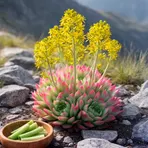
A mountain plant with thick pink-tipped leaves and yellow flowers used in herbal medicine
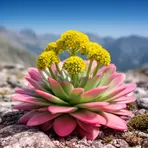
A mountain plant with thick pink-tipped leaves and groups of yellow flowers
Surface Forms
Morphology
Sedum + rosea
The name is a scientific binomial combining the genus 'Sedum' (a succulent plant) with the epithet 'rosea' (Latin-derived meaning 'rosy' or 'rose-coloured'), so the phrase denotes a rose-coloured Sedum (roseroot). This is a straightforward, descriptive composition following standard naming patterns, so a B1 learner who knows both constituents can infer the meaning.
Etymology
Sedum rosea comes from two old parts: Sedum names a group of small, thick-leaved plants and rosea means 'pink'. People called it 'roseroot' because its leaves often have pink tips and its roots were used in old remedies, so the name helps you picture a pink-tipped mountain plant.

