

Scilla nonscripta
- noun
- Specialized
- The woodland floor was covered with Scilla nonscripta in full bloom.
Examples
-
Every spring, tourists visit to photograph the spectacular displays of Scilla nonscripta.
-
The beautiful Scilla nonscripta blooms in early spring.
-
Botanists debated whether Scilla nonscripta should be classified in the Hyacinthoides or Scilla genus.
-
Have you seen the Scilla nonscripta in the garden?
-
Every spring, tourists visit to photograph the spectacular displays of Scilla nonscripta.
-
The woodland floor was covered with Scilla nonscripta in full bloom.
-
Have you seen the Scilla nonscripta in the garden?
Synonyms
 5
2.6
5
2.6

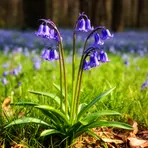
A plant with bell-shaped blue flowers that grows in woods or fields

A wild plant with blue, bell-shaped flowers that grows in woods in Western Europe
Surface Forms
Morphology
Scilla + nonscripta
This is a Latin binomial (scientific) name and functions as a proper taxonomic label rather than a compositional English phrase; the second element 'nonscripta' is not an English word and offers no transparent cue to meaning for a B1 learner. Even if a learner recognised 'Scilla' as a plant genus, the specific species sense 'a kind of bluebell' cannot be derived from the constituents, so the expression is not predictable from its parts.
Etymology
Scilla nonscripta gets its name from old Latin plant naming. The first part, Scilla, is an old name for bulb plants with bell-shaped flowers, and the second part, nonscripta, means 'not written' — one popular idea is this points to plain, unmarked petals compared with other species, so the name helps identify this common bluebell.