

Saxon
 12
8.1
12
8.1

- noun
- /ˈsæksən/
 :
sajón
:
sajón
- The Saxon warriors defended their territory fiercely against invaders.
- Anglo-Saxon
- Saxon immigrants
- Saxon world
Bead tells us it's the Anglo Sax, the Saxons, excuse me, the Angles, the Saxons and the Jutes.
- Bead tells us it's the Anglo Sax, the Saxons, excuse me, the Angles, the Saxons and the Jutes.
- And then he talks about, you know, the, the, the Romans and the Britons and the Saxons coming in and all that.
- Swords were also the most prestigious weapon, most prestigious type of fighting implement for the early Anglo Saxons.
- I Anglo Saxons Americans are losing our pre Norman Conquest culture.
Examples
-
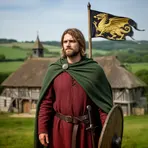
The Saxon forces approach.
-
To defeat the Saxon we need a master of war.
-
The Saxon fought the Viking.
-
On their third try, the Saxon cavalry tried to attack Charles's right flank.
-
Fired on by friendly units, the Saxons panicked and fled with heavy losses.
-
It all began in 484 AD, when King Arthur and his wizard, Merlin, stared down and vanquished the Saxon hordes at Mount Badon.
-
Historians often study how the Saxon culture influenced modern England.
-
During the early Middle Ages, the Saxon tribes established settlements across Britain.
Synonyms
 1
8.8
1
8.8
A person from England before the Norman Conquest or their descendants
Compounds
 1
7.2
1
7.2
A white person with British family background who follows Protestant Christianity and is often from a socially important group


- Offensive
A short rude English word of four letters that insults someone
- Specialized
An old language spoken in northern Germany before 1200 that later became Low German and is like Old English
- Archaic
An old form of English used in speech and writing in southwest England before the Norman Conquest
Surface Forms
Etymology
Saxon as a noun originally named a Germanic people, probably from the word seax 'knife' because that tool was important to them. A Saxon is therefore a member of that early group who settled in England and helped shape its language and society.