
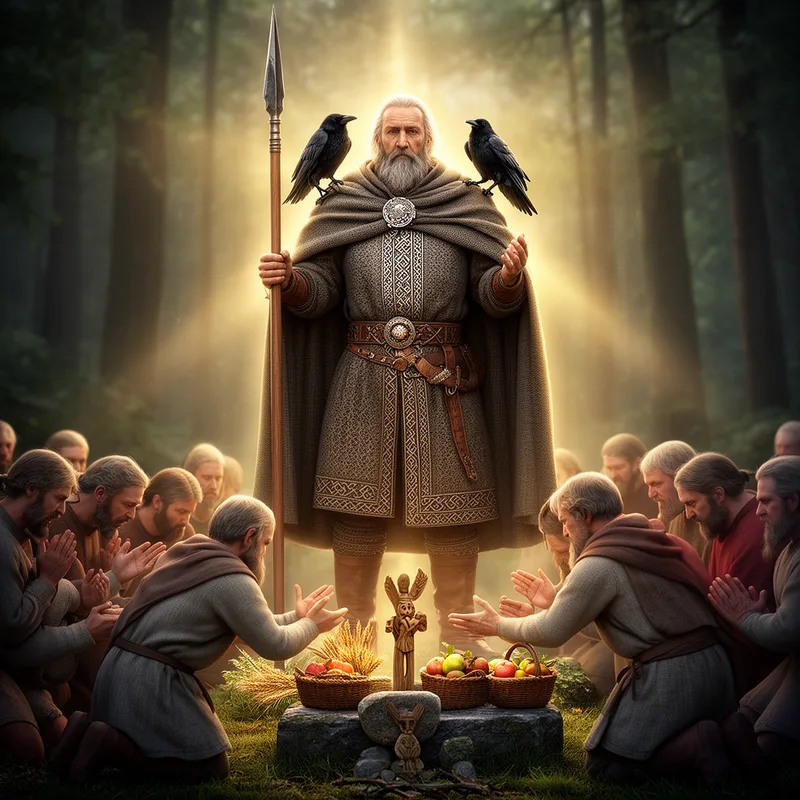
Anglo-Saxon deity
- noun
- /ˈæŋɡloʊˈsæksən ˈdiːəti/
- Literature
- The Anglo-Saxon deity Tiw was associated with war.
Examples
-
Few written records survive describing how the Anglo-Saxon deity Woden was worshipped.
-
Many Anglo-Saxon deities were associated with nature and fertility.
-
Many ancient rituals were performed in honor of an Anglo-Saxon deity believed to control the harvest.
-
The mythology course covered the characteristics of each Anglo-Saxon deity in detail.
-
Many ancient rituals were performed in honor of an Anglo-Saxon deity believed to control the harvest.
-
Few written records survive describing how the Anglo-Saxon deity Woden was worshipped.
-
The mythology course covered the characteristics of each Anglo-Saxon deity in detail.
Synonyms

 62
7.4
62
7.4

A god or goddess that people worship and think has power over part of the world
 55
3.0
55
3.0
An object or image that people worship and treat as having power
Surface Forms
Morphology
The meaning 'a god or goddess worshipped by the Anglo-Saxons' is directly and transparently derived from combining 'Anglo-Saxon' (relating to the Anglo‑Saxon people) with 'deity' (a worshipped god or goddess). This adjectival + noun composition follows normal English noun-phrase semantics and is cross-linguistically regular, so a B1 learner who knows both constituents will readily understand it.
Etymology
Anglo-Saxon deity names a god worshipped by the early English people called the Anglo-Saxons. Picture villagers offering their harvest to a god like Woden. The word Anglo-Saxon points to the people and deity means 'god', so the phrase means a god those people once worshipped.