
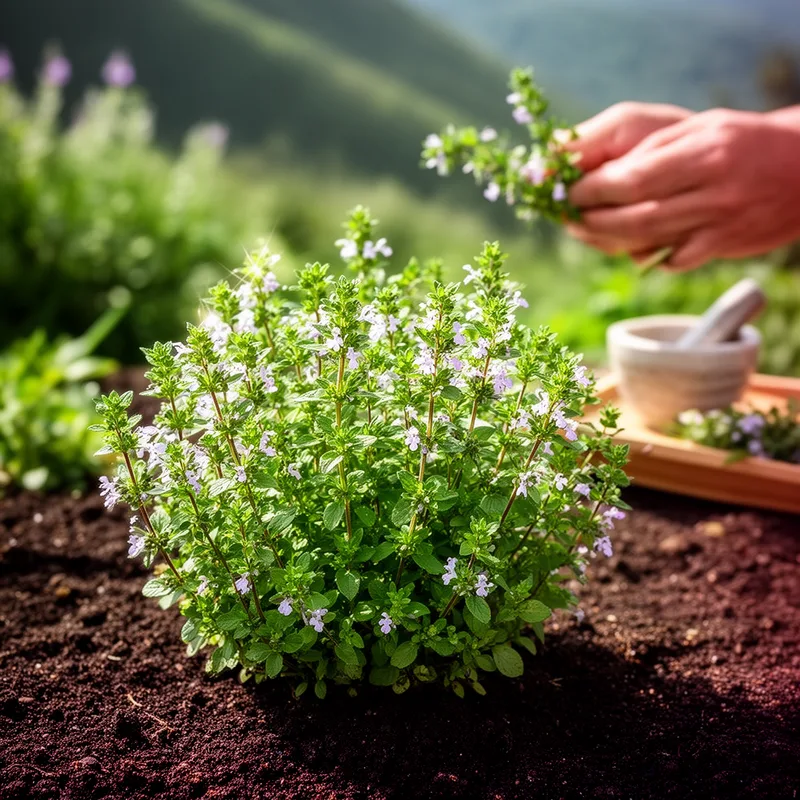
Satureja calamintha officinalis
- noun
- Specialized
- The garden was filled with fragrant Satureja calamintha officinalis in full bloom.
Examples
-
I love using Satureja calamintha officinalis in my herbal teas.
-
Have you tried Satureja calamintha officinalis in your cooking?
-
Herbalists often recommend Satureja calamintha officinalis for its soothing properties.
-
We identified a cluster of Satureja calamintha officinalis growing wild along the hillside.
-
Herbalists often recommend Satureja calamintha officinalis for its soothing properties.
-
The garden was filled with fragrant Satureja calamintha officinalis in full bloom.
-
I love using Satureja calamintha officinalis in my herbal teas.
Synonyms
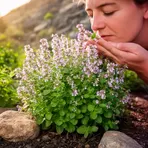
A plant with small flowers that smells like mint and lives for many years

A plant like mint with a pleasant smell used to flavor food and tea
Surface Forms
Morphology
Satureja + Calamintha + officinalis
This is a botanical Latin name made up of identifiable genus names plus the epithet 'officinalis' which explicitly denotes medicinal use; given the provided constituent meanings, a learner can infer it denotes a medicinal/aromatic herb (calamint). Although technical and Latin, the components compositionally indicate plant identity and properties and follow cross-linguistic scientific naming conventions, so the overall meaning is directly derivable from the parts.
Etymology
Satureja calamintha officinalis comes from old names for minty herbs: Satureja is the name for a group of herbs, calamintha became the common name 'calamint', and officinalis shows it was 'used as medicine'. So the full name paints a simple picture — a mint‑scented herb kept for soothing uses, which is why it refers to the plant we call 'calamint' today.

