
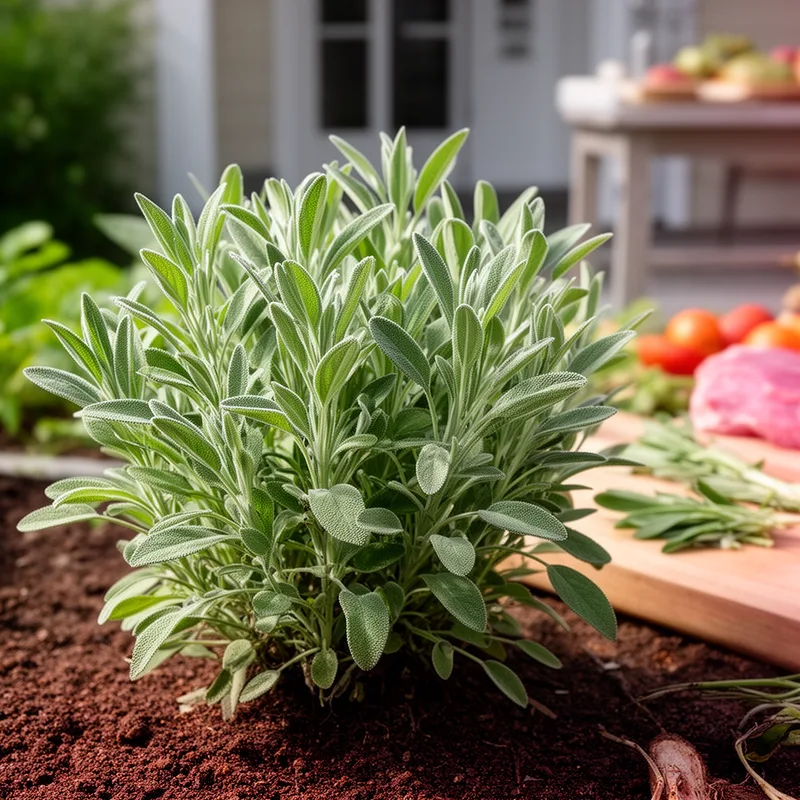
Salvia officinalis
- noun
- /ˈsælviə əˌfɪʃəˈnælɪs/
- Specialized
- The leaves of Salvia officinalis are prized for their strong, earthy aroma and culinary uses.
Examples
-
Many recipes call for fresh Salvia officinalis to add flavor to meat dishes.
-
Gardeners often grow Salvia officinalis because its leaves are both attractive and useful in the kitchen.
-
I added Salvia officinalis to my pasta sauce.
-
Have you ever tried Salvia officinalis in your recipes?
-
I often use Salvia officinalis to flavor my roasted chicken dishes.
-
Herbal tea made from Salvia officinalis is known for its soothing properties.
-
Many chefs appreciate Salvia officinalis for its unique, aromatic taste in various recipes.
Synonyms

 46
3.5
46
3.5

A grey-green plant with leaves that have a strong smell and add flavor to food
 9
9.9
9
9.9
A small bush with strong smelling grey green leaves used to flavor food

A small bush with strong-smelling grey-green leaves used to flavor food
Surface Forms
Morphology
This is a literal binomial name combining the genus 'Salvia' (a sage plant) with the epithet 'officinalis' (denoting a plant used medicinally). The MWE's meaning — a medicinal/culinary sage — is directly recoverable from the constituent parts, so a learner who knows both components can infer the referent. Although Latin botanical names are specialized, their compositional logic is transparent and cross-linguistically consistent.
Etymology
Salvia officinalis comes from old Latin words. Salvia may come from the word 'salvare', meaning 'to save' or 'heal', and officinalis marked plants 'used for medicine', so the name suggests a healing herb that is also used in cooking today.