
Salmonella typhimurium
- noun
- /ˌsælməˈnɛlə taɪfɪˈmʊəriəm/
- Specialized
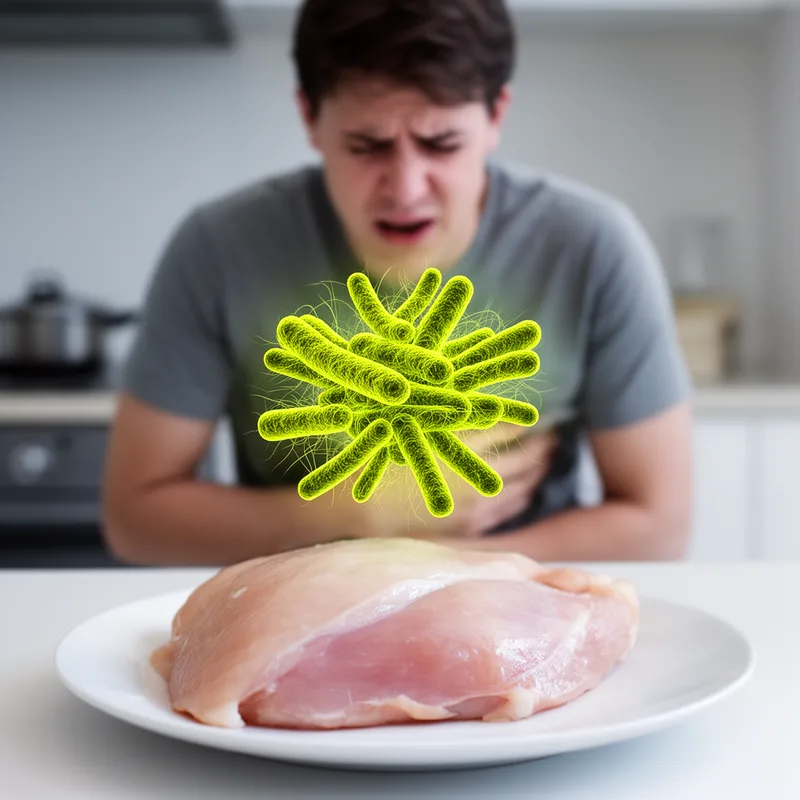
- Eating undercooked poultry can lead to infection caused by Salmonella typhimurium, resulting in severe abdominal pain.
Examples
-
Another case study involved a 1983 outbreak of salmonella poisoning that resulted from the ingestion of raw milk contaminated with multi-resistant Salmonella typhimurium.
Academic text (2000) -
One study concluded that plasmids found in outbreaks of Salmonella typhimurium were similar in both animals and humans.
Academic text (2000) -
The potential problems posed by fluoroquinolone resistance are significant because fluoroquinolones are the primary treatment for resistant strains of Salmonella typhimurium in human beings.
Academic text (2000) -
According to Angulo, resistance monitoring programs have begun to detect isolates of a second Salmonella Typhimurium strain that resists eight classes of antibiotics.
Academic text (2000) -
Public health officials warned that a recent outbreak of Salmonella typhimurium has caused dozens of cases of food poisoning.
-
Proper food handling is essential to prevent the spread of Salmonella typhimurium in kitchen environments.
Surface Forms
Morphology
salmonella + typhimurium
The element 'salmonella' transparently signals a bacterium, so a learner who knows that word can infer this phrase names a type/strain of Salmonella. However, 'typhimurium' is a Latin species epithet with no compositional English meaning, so the precise properties or differences of this species cannot be derived from the parts without background knowledge of taxonomy.
Etymology
Salmonella typhimurium may come from a person's name and a simple description. The first part, Salmonella, was 'named after' the scientist Daniel Salmon, and the second part, typhimurium, meant 'typhus-like in mice', so the name points to this bacterium that can cause 'food poisoning' in people.

