
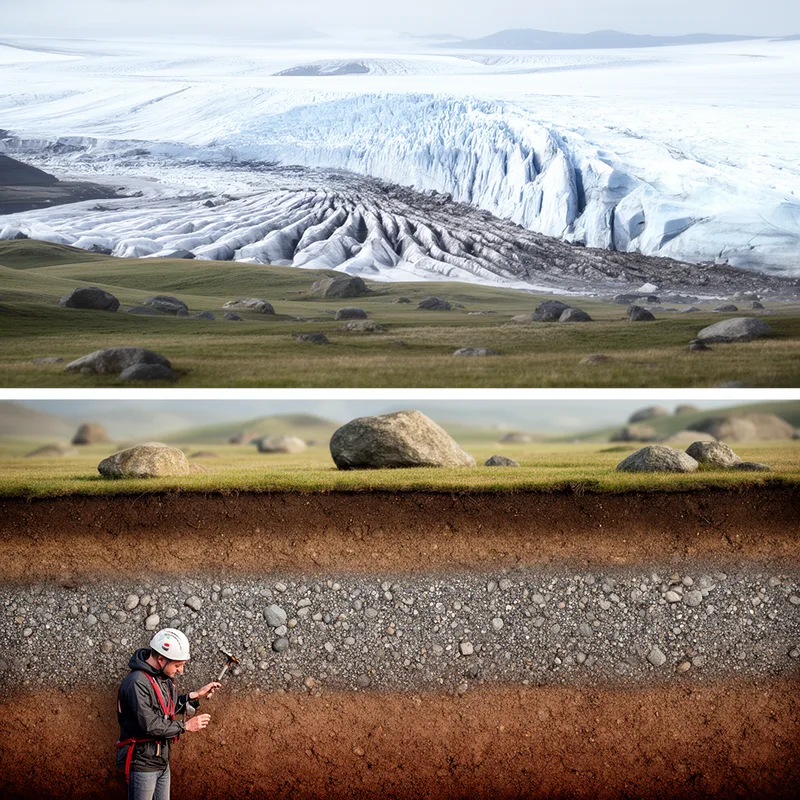
Saale glaciation
- noun
- Specialized
- The Saale glaciation significantly shaped the landscape of northern Europe through ice movement and deposition.
Examples
-
Studies of the Saale glaciation help scientists reconstruct Pleistocene climate patterns.
-
Geologists discovered evidence of the Saale glaciation in the sediment layers beneath the North German Plain.
-
The Saale glaciation significantly shaped the landscape of northern Europe.
-
During the Saale glaciation, many species adapted to colder climates.
-
Geologists discovered evidence of the Saale glaciation in the sediment layers beneath the North German Plain.
-
Studies of the Saale glaciation help scientists reconstruct Pleistocene climate patterns.
-
The Saale glaciation significantly shaped the landscape of northern Europe through ice movement and deposition.
Surface Forms
Morphology
Saale + glaciation
The noun 'glaciation' clearly gives the core meaning (a period/area covered by ice), and 'Saale' functions as a place/name identifier, so a learner who knows both words can infer this refers to a glaciation associated with the Saale region. However, the specific temporal/geological nuance ('next-to-last major Pleistocene glaciation') is specialized knowledge not derivable from the parts alone, so the expression is only partially predictable to a B1 learner.
Etymology
Saale glaciation is named after the Saale river area in Germany, where people first found signs of the great ice, and glaciation means a time when slow rivers of ice called glaciers covered the land. So, the name now refers to that old 'ice age' and the soil and rocks the ice left behind.

