
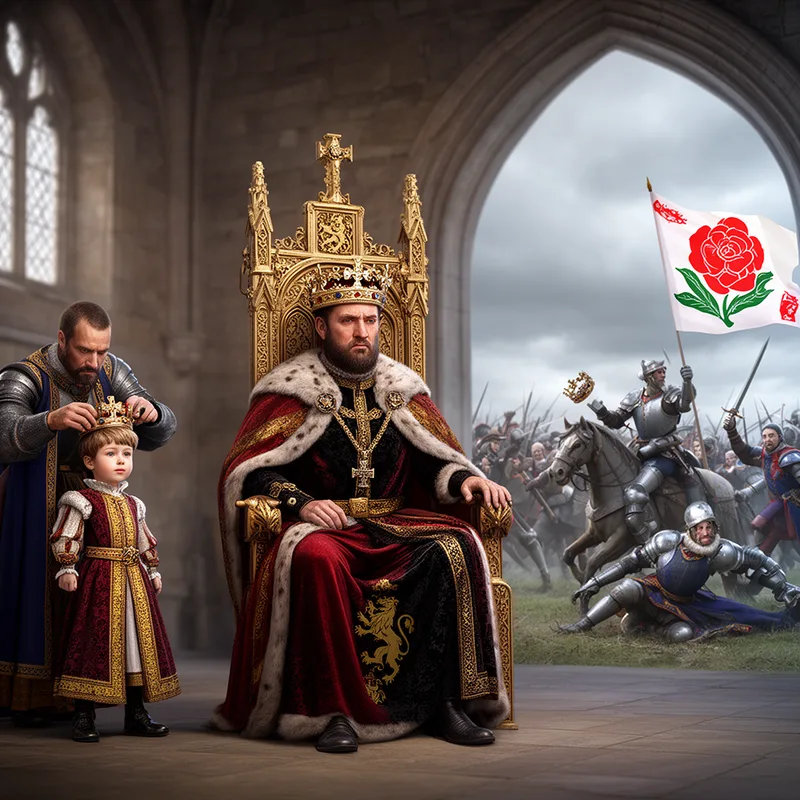
Richard III
 10
6.6

- proper noun
- Historians continue to debate whether Richard III was truly responsible for the disappearance of the princes in the Tower.
Examples
-
The remains of Richard III were discovered beneath a parking lot in Leicester in 2012.
-
William Shakespeare wrote a famous play about Richard III that explores his rise and fall.
-
Many historians consider Richard III a controversial figure.
-
Did Richard III really murder his nephews?
-
Historians continue to debate whether Richard III was truly responsible for the disappearance of the princes in the Tower.
-
The remains of Richard III were discovered beneath a parking lot in Leicester in 2012.
-
William Shakespeare wrote a famous play about Richard III that explores his rise and fall.
Synonyms


 1
6.9
King of England from 1483 to 1485 who took the throne and lost to Henry Tudor at Bosworth Field
Surface Forms
Morphology
Richard + III
The form 'Richard III' transparently indicates 'the third person named Richard' because 'Richard' is a personal name and 'III' is the Roman numeral for three — a compositional and cross-linguistically familiar pattern. However, the detailed encyclopedic meaning (that he was King of England from 1483–1485 and the specific historical events associated with him) cannot be inferred from the constituents alone, so the expression is only partly transparent.
Etymology
Richard III was a 'king of England' from 1483 to 1485 who took the crown from his young nephew and died in the battle that ended his rule. His story of the missing princes, Shakespeare's play, and the later discovery of his bones under a parking lot is why people still remember him as that troubled king today.