
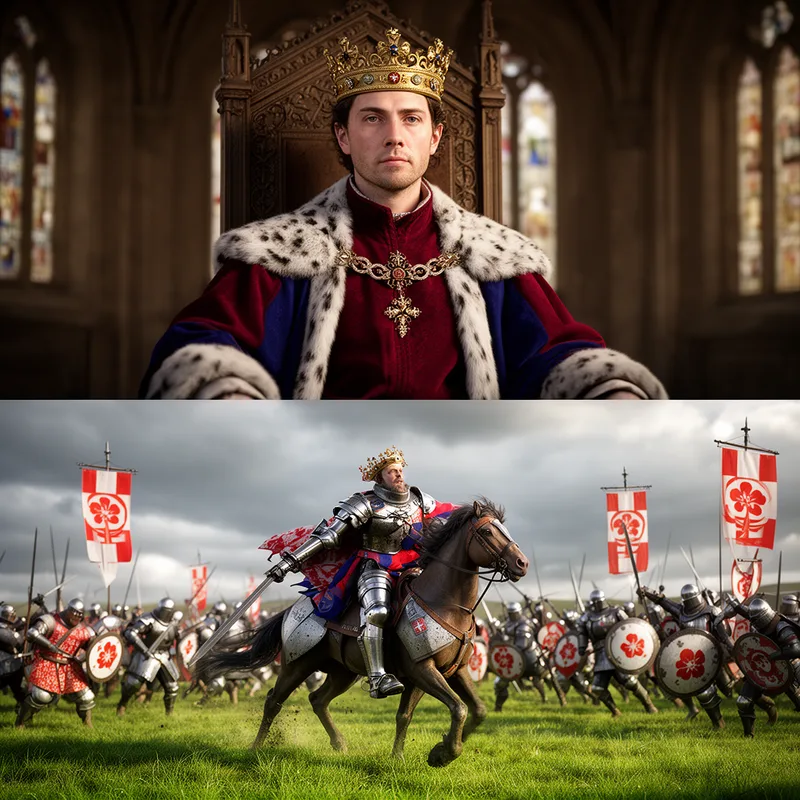
Richard III of England


 1
6.9
- proper noun
- The defeat of Richard III of England at Bosworth Field marked the start of the Tudor dynasty.
Examples
-
Historians continue to debate the role of Richard III of England in the disappearance of the Princes in the Tower.
-
Shakespeare’s play about Richard III of England depicts him as a villainous monarch.
-
Richard III of England was a king.
-
King Richard III of England ruled for only two years.
-
Shakespeare’s play about Richard III of England depicts him as a villainous monarch.
-
Historians continue to debate the role of Richard III of England in the disappearance of the Princes in the Tower.
-
The defeat of Richard III of England at Bosworth Field marked the start of the Tudor dynasty.
Synonyms
 10
6.6
King of England from 1483 to 1485 who took the throne from his nephew and lost to Henry Tudor
Surface Forms
Morphology
The phrase is compositionally built from a personal name + a Roman numeral + a country marker: 'Richard' (name) + 'III' (the third) + 'of England' (associated with England). This naming convention is cross-linguistically common for monarchs, so a B1 learner who knows the constituents can infer it refers to the third Richard connected with England (i.e., a historical king), even if they wouldn't know the detailed dates or events.
Etymology
Richard III of England was a 15th-century king who took the throne from his young nephew and is linked to the mystery of the missing Princes in the Tower. He was defeated and killed by Henry Tudor at Bosworth Field in 1485, and that's why he is remembered as the last king of his royal family and a famous, often debated figure in history and drama.