

Rheum
- noun
- /ruːm/
- Specialized
- The leaves of Rheum species are often large and triangular.
Examples
-
Scientists study different species within the Rheum genus for medicinal purposes.
-
The Rheum plant is often used in desserts.
-
The most commonly cultivated member of Rheum is used in pies and desserts.
-
I enjoy making pies with Rheum stalks.
-
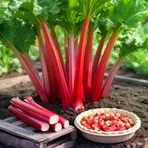
Rheum is often grown in gardens for its large, edible stems, commonly known as rhubarb.
-
The herbalist recommended using Rheum to aid digestion and relieve constipation.
-
During the spring, the bright red stalks of Rheum attract many gardeners looking for flavorful additions to their desserts.
Compounds


- Specialized
A plant from the Himalayas whose roots are used in traditional medicine

- Specialized
A garden plant like rhubarb grown for its sour edible stems used in pies or jam

- Specialized
A rhubarb plant from Asia that is used in traditional medicine to help people with constipation
Surface Forms
Etymology
Rheum comes from an old Greek word rheo that means 'flow'. Plants in this group, like rhubarb, have thick, juicy stalks that seem to 'flow' with sap, so the name points to their liquid quality.

