
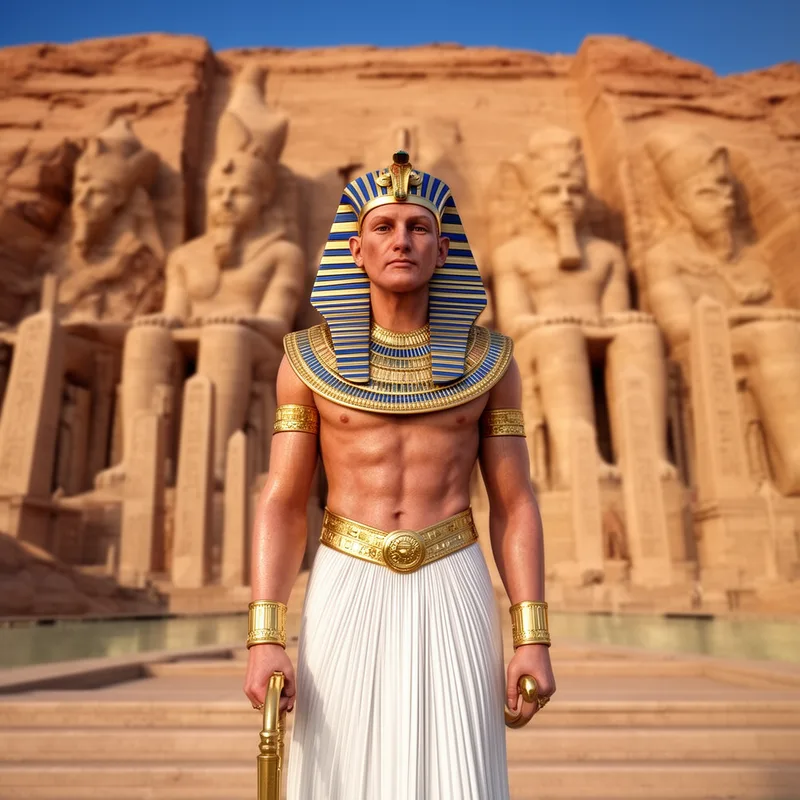
Ramses the Great
 1
7.7

- proper noun
- The massive temples at Abu Simbel were constructed during the reign of Ramses the Great.
Examples
-
Historians consider Ramses the Great one of the most successful pharaohs in Egypt's history.
-
Many statues and monuments bearing the name Ramses the Great still fascinate archaeologists today.
-
Many historians regard Ramses the Great as one of the most powerful pharaohs.
-
Did Ramses the Great really build the temples at Abu Simbel?
-
Historians consider Ramses the Great one of the most successful pharaohs in Egypt's history.
-
The massive temples at Abu Simbel were constructed during the reign of Ramses the Great.
-
Many statues and monuments bearing the name Ramses the Great still fascinate archaeologists today.
Synonyms

 1
8.1
King of ancient Egypt who ruled around 1300 BC, led many wars, and built many large temples
 1
8.6
An ancient Egyptian king known for leading armies and building large temples
 1
9.2
An Egyptian pharaoh from about 1200 BC who built many monuments and led many wars
 1
8.9
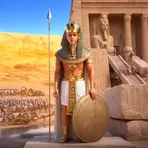
An Egyptian king who ruled long ago, fought wars and built many temples
 1
8.1
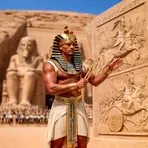
A famous ancient Egyptian king known for building large temples and winning wars
Surface Forms
Morphology
The phrase is compositionally transparent: 'Ramses' is a proper name and 'the Great' is a common epithet meaning distinguished or renowned, so a B1 learner who knows both constituents will understand it denotes a famous/important person (specifically a notable ruler). While the exact historical details (which pharaoh, dates, accomplishments) are not recoverable from the words alone, the basic sense of a celebrated leader is directly inferable and cross-linguistically common.
Etymology
Ramses the Great is named for Pharaoh Ramses II, who ruled a very long time and built many huge temples and statues that showed his power. Because of his long rule and these lasting monuments, people called him 'the Great', and the name today reminds us that he was a very powerful and important ruler.