
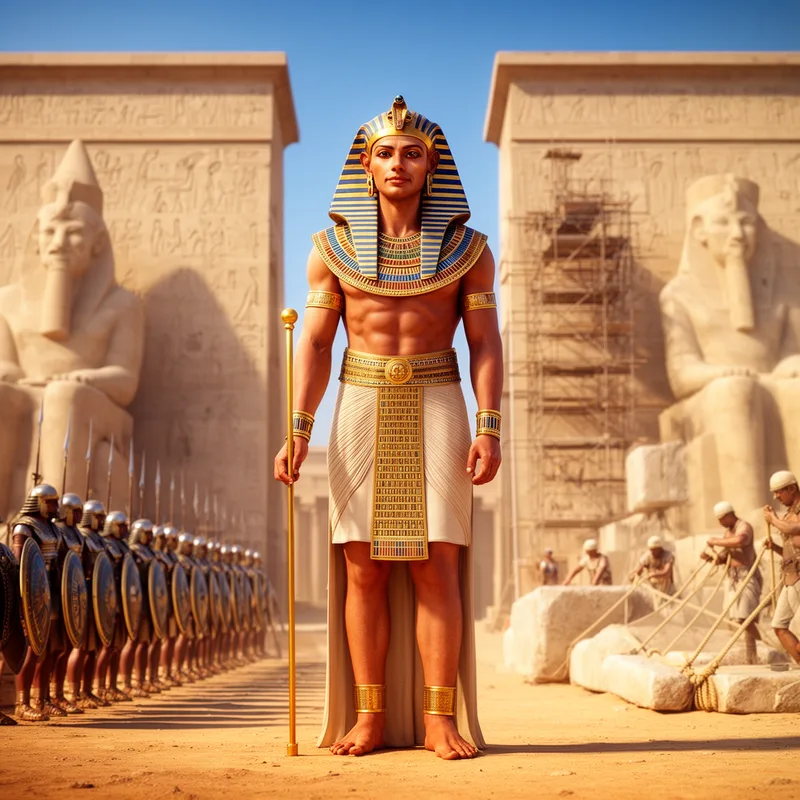
Ramesses the Great


 1
8.6
- proper noun
- Many historians consider Ramesses the Great one of Egypt's most powerful pharaohs.
Examples
-
Ramesses the Great ruled for over sixty years.
-
The reign of Ramesses the Great was marked by impressive architectural achievements.
-
Historians often refer to Ramesses the Great as Egypt's most powerful pharaoh.
-
Many statues of Ramesses the Great stand tall in Egyptian temples today.
-
Historians often refer to Ramesses the Great as Egypt's most powerful pharaoh.
-
The reign of Ramesses the Great was marked by impressive architectural achievements.
-
Many statues of Ramesses the Great stand tall in Egyptian temples today.
Synonyms
 14
8.1
A name used by several ancient Egyptian kings, especially the famous king who ruled around 1300 BC
 4
9.9
A name for eleven Egyptian kings who ruled long ago, especially Rameses II
 1
9.9
One of eleven kings of ancient Egypt from long ago, the most famous being Ramesses II
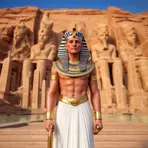 1
7.7
A king of ancient Egypt who built many large temples and ruled for a long time
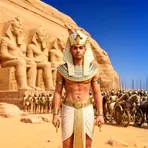 1
8.1
King of ancient Egypt who ruled around 1300 BC, led many wars, and built many large temples
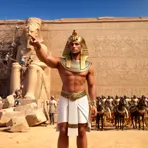 1
9.2
An Egyptian pharaoh from about 1200 BC who built many monuments and led many wars
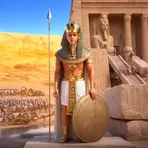 1
8.9
An Egyptian king who ruled long ago, fought wars and built many temples
 1
8.1
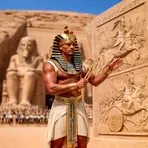
A famous ancient Egyptian king known for building large temples and winning wars
Surface Forms
Morphology
The phrase is compositional: 'Ramesses' names an Egyptian king and 'the Great' is an epithet meaning notably important, so a learner who knows both words can infer this refers to a particularly famous/prominent Ramesses. Detailed historical specifics (dates, achievements) are not derivable from the phrase, but the general sense of a distinguished ruler is transparent and is signalled similarly across languages.
Etymology
Ramesses the Great was called this because the Egyptian king Ramesses built huge temples and won many battles. Calling him 'the Great' showed he was very powerful and famous, and that is why we still use this name today.