
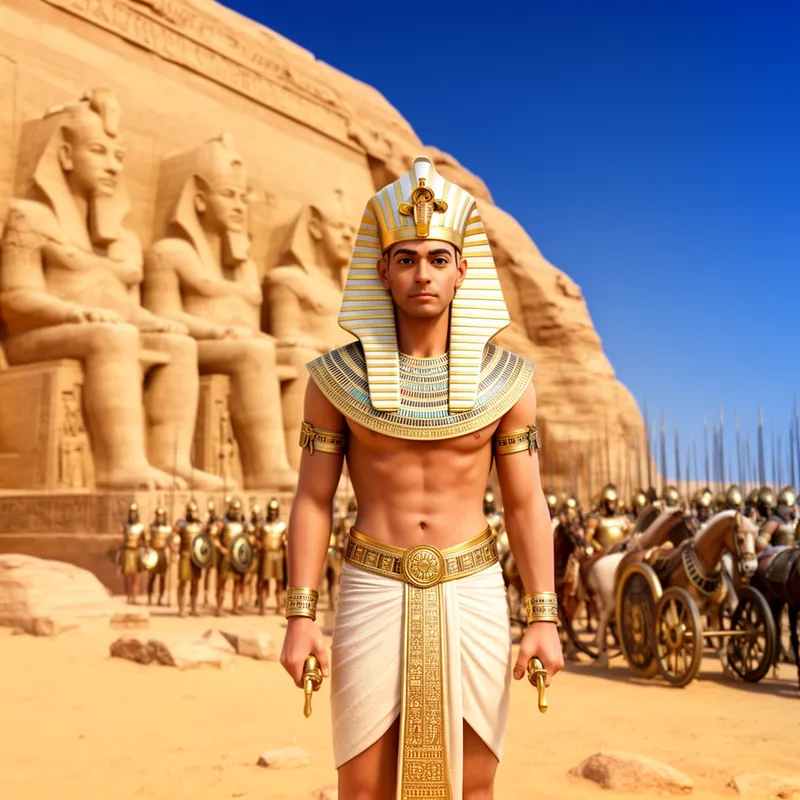
Ramses II


 1
8.1
- proper noun
- To the east are the ruins of the Second Pylon, begun by the pharaoh Ramses II and finished by Ramses II.
Examples
-
The temples built by Ramses II still stand as magnificent examples of ancient Egyptian architecture.
-
Ramses II (the Great) was one of the most prolific builders of ancient Egypt.
-
In his lifetime, Ramses II led numerous military campaigns to expand and protect the Egyptian empire.
-
Many historians regard Ramses II as one of the most powerful and influential rulers of ancient Egypt.
-
The great pharaoh Ramses II ruled Egypt for over sixty years.
-
Did Ramses II really build more temples than any other pharaoh?
-
This avenue of ram-headed sphinxes, each originally guarding a miniature statue of Ramses II between its paws, greets the visitor entering Karnak Temple.
Synonyms
 1
7.7
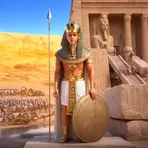
A king of ancient Egypt who built many large temples and ruled for a long time
 1
8.6
An ancient Egyptian king known for leading armies and building large temples
 1
9.2
An Egyptian pharaoh from about 1200 BC who built many monuments and led many wars
 1
8.9
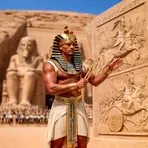
An Egyptian king who ruled long ago, fought wars and built many temples
 1
8.1
A famous ancient Egyptian king known for building large temples and winning wars
Surface Forms
Morphology
The expression is fully compositional: 'Ramses' identifies the name of Egyptian kings and 'II' is the Roman numeral for two, so a learner who knows both constituents will understand this refers to the second king named Ramses (i.e. a pharaoh). They may not infer specific dates or accomplishments, but the referential identity is directly derivable from the parts.
Etymology
Ramses II comes from an old Egyptian name that means 'born of Ra', with Ra as the sun god. So the name showed he was linked to the sun god and made people see him as a strong ruler.