
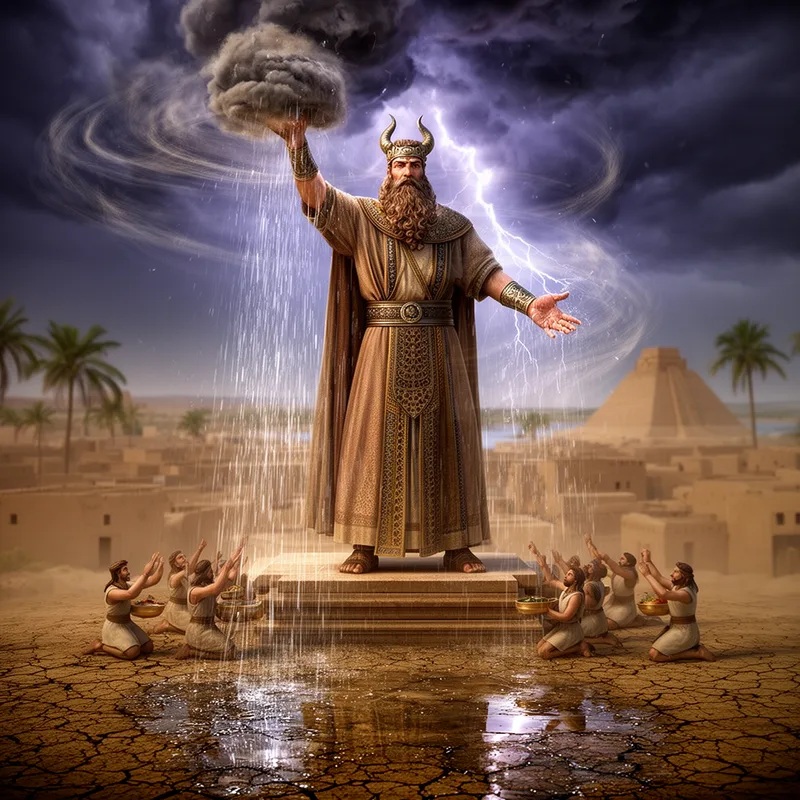
Ramman


 1
9.9
- proper noun
- Literature
- The ancient Mesopotamians worshipped Ramman as the god who controlled storms and rainfall.
Examples
-
Offerings were made to Ramman to appease his wrath during times of drought and tempest.
-
In comparative mythology, Ramman is often identified with other storm deities such as Adad.
-
In ancient texts, Ramman is often depicted as a powerful deity.
-
Ramman was worshipped by the people of Mesopotamia.
-
The ancient Mesopotamians worshipped Ramman as the god who controlled storms and rainfall.
-
Offerings were made to Ramman to appease his wrath during times of drought and tempest.
-
In comparative mythology, Ramman is often identified with other storm deities such as Adad.
Synonyms
93
7.0
A god from Norse stories who controls thunder and rain and carries a hammer
 1
9.9
A god in ancient Babylonia who controls storms and wind
 1
9.9
A god of thunder in old stories from northern Europe often shown holding a hammer
 1
9.9
A storm god and demon from ancient Mesopotamian myth who appears as a giant black bird
 1
9.9
A god in Greek stories who controls the winds and storms
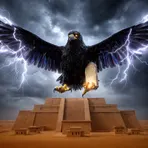
A storm god from ancient Mesopotamia often appears as a large black bird
Surface Forms
Etymology
Ramman comes from an old Semitic name that meant something like 'thunder' or 'storm'. So Ramman was the storm god who brought wind and rain, which is why his name is linked to storms.