
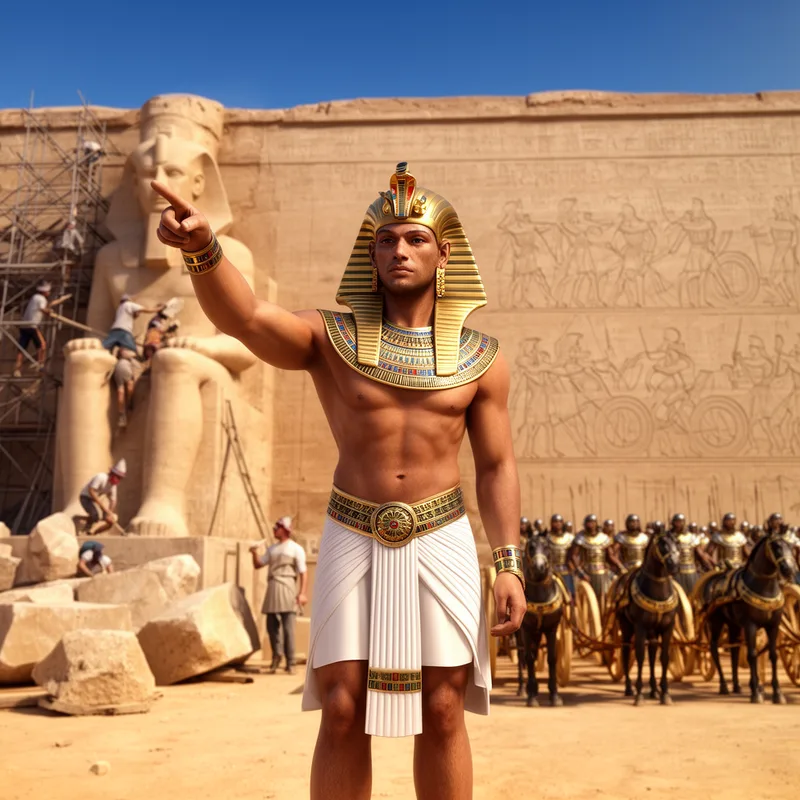
Ramesses II


 1
9.2
- proper noun
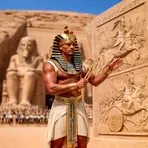
- The colossal statues at Abu Simbel were built by Ramesses II to commemorate his reign.
Examples
-
Historians often refer to Ramesses II as 'Ramesses the Great' because of his monumental building projects.
-
Many ancient inscriptions describe the military campaigns led by Ramesses II.
-
Many ancient inscriptions describe the military campaigns led by Ramesses II.
-
The great Egyptian pharaoh Ramesses II is often called Ramses the Great.
-
Did Ramesses II really build more monuments than any other pharaoh?
-
Historians often refer to Ramesses II as 'Ramesses the Great' because of his monumental building projects.
-
The colossal statues at Abu Simbel were built by Ramesses II to commemorate his reign.
Synonyms
 14
8.1
A name used by several ancient Egyptian kings, especially the famous king who ruled around 1300 BC
 4
9.9
A name for eleven Egyptian kings who ruled long ago, especially Rameses II
 1
9.9
One of eleven kings of ancient Egypt from long ago, the most famous being Ramesses II
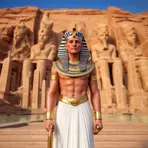 1
7.7
A king of ancient Egypt who built many large temples and ruled for a long time
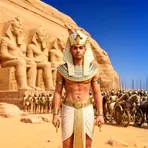 1
8.1
King of ancient Egypt who ruled around 1300 BC, led many wars, and built many large temples
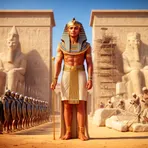 1
8.6
An ancient Egyptian king known for leading armies and building large temples
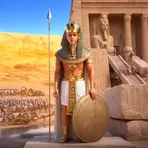 1
8.9
An Egyptian king who ruled long ago, fought wars and built many temples
 1
8.1
A famous ancient Egyptian king known for building large temples and winning wars
Surface Forms
Morphology
The phrase is fully compositional: 'Ramesses' is a royal name (a king of ancient Egypt) and 'II' is the Roman numeral for two, so a learner who knows both constituents can infer this refers to the second Ramesses, i.e. a specific Egyptian pharaoh. Roman-numeral ordinal naming of monarchs is common cross-linguistically, supporting immediate comprehension.
Etymology
Ramesses II comes from an ancient Egyptian name that means 'born of the sun god Ra'. The II shows he was the 'second' king with that name. Because he built huge temples and statues that still show his name, people today remember him as a great ruler.