
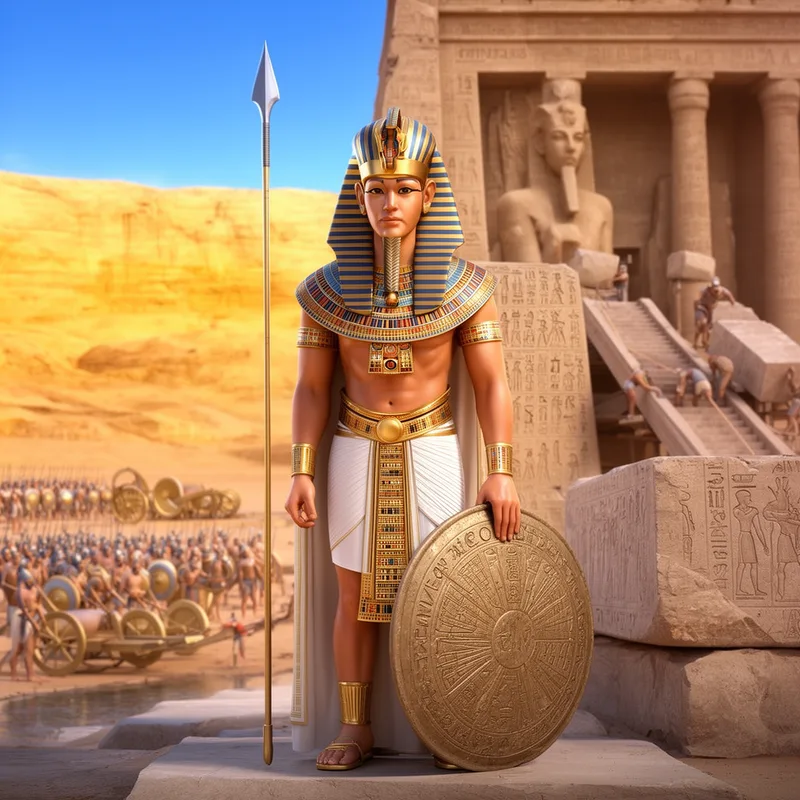
Rameses the Great


 1
8.9
- proper noun
- Many monumental temples, including the famous Abu Simbel, were constructed during the reign of Rameses the Great.
Examples
-
Historians study the military campaigns led by Rameses the Great, especially the Battle of Kadesh.
-
Rameses the Great is often regarded as one of ancient Egypt’s most powerful and accomplished pharaohs.
-
The magnificent temples built by Rameses the Great still stand today.
-
Did Rameses the Great really lead so many successful military campaigns?
-
Rameses the Great is often regarded as one of ancient Egypt’s most powerful and accomplished pharaohs.
-
Historians study the military campaigns led by Rameses the Great, especially the Battle of Kadesh.
-
Many monumental temples, including the famous Abu Simbel, were constructed during the reign of Rameses the Great.
Synonyms
 14
8.1
A name used by several ancient Egyptian kings, especially the famous king who ruled around 1300 BC
 4
9.9
A name for eleven Egyptian kings who ruled long ago, especially Rameses II
 1
9.9
One of eleven kings of ancient Egypt from long ago, the most famous being Ramesses II
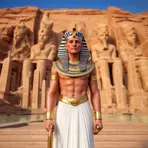 1
7.7
A king of ancient Egypt who built many large temples and ruled for a long time
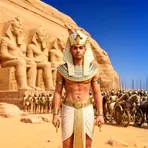 1
8.1
King of ancient Egypt who ruled around 1300 BC, led many wars, and built many large temples
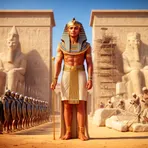 1
8.6
An ancient Egyptian king known for leading armies and building large temples
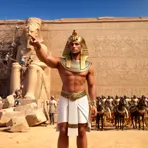 1
9.2
An Egyptian pharaoh from about 1200 BC who built many monuments and led many wars
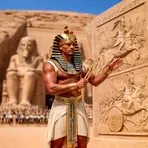 1
8.1
A famous ancient Egyptian king known for building large temples and winning wars
Surface Forms
Morphology
The phrase is compositional: 'Rameses' names a specific Egyptian king and 'the Great' is a conventional epithet meaning notably important or distinguished, so a learner who knows both constituents can infer it denotes a prominent/renowned pharaoh. This epithet pattern is cross-linguistically common (e.g. 'Alexander the Great'), supporting immediate comprehension.
Etymology
Rameses the Great got his name because later people praised a powerful pharaoh who built huge temples and won many battles. They added 'the Great' to show he was important and strong, so today the name tells us he was one of Egypt's most famous rulers.