
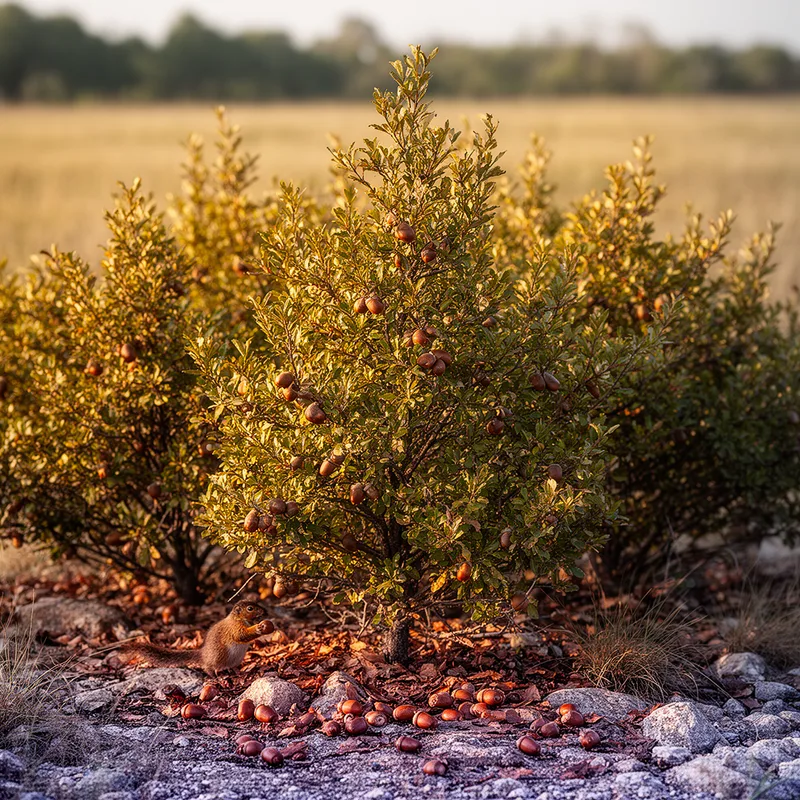
Quercus prinoides
- noun
- Specialized
- Dense thickets of Quercus prinoides are often found along the edges of prairies.
Examples
-
The sweet nuts of the Quercus prinoides attract various wildlife in the region.
-
Many people enjoy the nuts from the Quercus prinoides tree.
-
Botanists noted the adaptability of Quercus prinoides to poor, rocky soils.
-
The Quercus prinoides thrives in well-drained soil.
-
The sweet nuts of the Quercus prinoides are a popular snack during autumn.
-
Dense thickets of Quercus prinoides provide excellent shelter for local wildlife.
-
Many people enjoy harvesting the nuts from the Quercus prinoides due to their rich flavor.
Synonyms
A small bushy oak tree that makes sweet small acorns and forms dense thickets

A small bushy tree that makes sweet edible nuts and often grows in dense groups
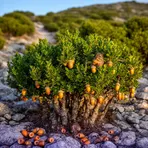
A small bushy oak that grows in dense groups and makes sweet nuts
Surface Forms
Morphology
Quercus + prinoides
This is a Latin binomial: 'Quercus' clearly signals the oak genus, so a learner knowing that constituent will infer it refers to an oak. However, the specific epithet 'prinoides' is not a common English word and does not transparently indicate the species’ particular traits to a B1 learner, so the full, species-level meaning requires domain knowledge.
Etymology
Quercus prinoides is a scientific name made of two parts: Quercus means 'oak' and prinoides may mean 'oak-like' or 'shrub-like', so the name paints a picture of a small, bushy oak. That's why the name fits a shrubby oak that forms dense thickets and has sweet nuts.

