

Pycnanthemum virginianum
- noun
- Specialized
- Crushing the leaves of Pycnanthemum virginianum releases a strong minty aroma.
Examples
-
Gardeners often plant Pycnanthemum virginianum to attract butterflies and bees.
-
The Pycnanthemum virginianum grows well in moist, well-drained soil.
-
Pycnanthemum virginianum is valued for its role in supporting native pollinators in restoration projects.
-
Have you ever seen a Pycnanthemum virginianum in bloom?
-
Pycnanthemum virginianum is often used in landscaping to enhance biodiversity by attracting various pollinators.
-
The fragrant leaves of Pycnanthemum virginianum are popular for making herbal teas due to their minty flavor.
-
In natural gardens, Pycnanthemum virginianum thrives alongside other native plants, creating a beautiful and functional habitat.
Synonyms

A plant from the eastern United States that lives for several years with narrow fragrant leaves and small green flowers
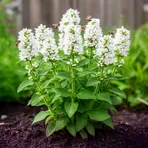
A small plant that lives for many years with scented leaves and small white flowers

A group of North American mint plants with aromatic leaves and small white or purple flowers
Surface Forms
Morphology
Pycnanthemum + virginianum
This is a standard botanical binomial composed of a genus name plus a species epithet; if a learner knows 'Pycnanthemum' as the mountain-mint genus and recognizes the Latin epithet 'virginianum' as indicating origin (of Virginia), they can infer the common meaning 'Virginia mountain mint'. Taxonomic naming is a regular, cross‑linguistic compositional pattern, so the overall meaning is derivable from the parts.
Etymology
Pycnanthemum virginianum may come from Greek parts: pycn- meaning 'many' and -anthemum meaning 'flower', and virginianum meaning 'from Virginia'. So the name paints a picture of a Virginia mint with lots of small, close-together flowers, which is why it fits the plant we call Virginia mountain mint today.

