

Puseyite tradition
- noun
- /ˈpjuːziˌaɪt trəˈdɪʃən/
- Formal
- The Puseyite tradition emphasized the importance of sacraments and apostolic succession in the Church.
Examples
-
Many churches influenced by the Puseyite tradition incorporate elaborate rituals into their worship services.
-
Many churches have adopted elements of the Puseyite tradition.
-
Her theological stance reflects core values of the Puseyite tradition within Anglicanism.
-
The Puseyite tradition emphasizes the importance of sacraments.
-
Her theological stance reflects core values of the Puseyite tradition within Anglicanism.
-
Many churches influenced by the Puseyite tradition incorporate elaborate rituals into their worship services.
-
The Puseyite tradition emphasized the importance of sacraments and apostolic succession in the Church.
Synonyms
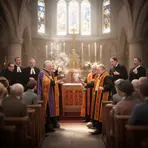
A 19th-century group in the Church of England that wanted to bring back Catholic rituals
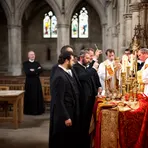
A 19th-century group in the Church of England that wanted to bring back Catholic traditions and oppose some modern changes

Religious beliefs and practices that Edward Pusey taught in the Oxford Movement

A movement in the Church of England that has many Catholic beliefs and ceremonies
Surface Forms
Morphology
Puseyite + tradition
The noun 'tradition' is fully transparent, but 'Puseyite' is a proper-name–derived label whose precise referent (followers or doctrines associated with Edward Pusey and the 19th‑century Oxford Movement) requires specific historical/religious knowledge. A learner who only knows the literal parts might infer it means a tradition associated with someone called Pusey, but would not recover the full, culturally specific meaning without extra background, so the phrase is only partially predictable.
Etymology
Puseyite tradition gets its name from Edward Bouverie Pusey, a 19th-century Oxford priest who wanted the Church of England to return to older, more Catholic-style worship with stronger rituals and church order. So, Puseyite tradition means 'a movement in the Church that follows Pusey's ideas about rituals and church order'.

