
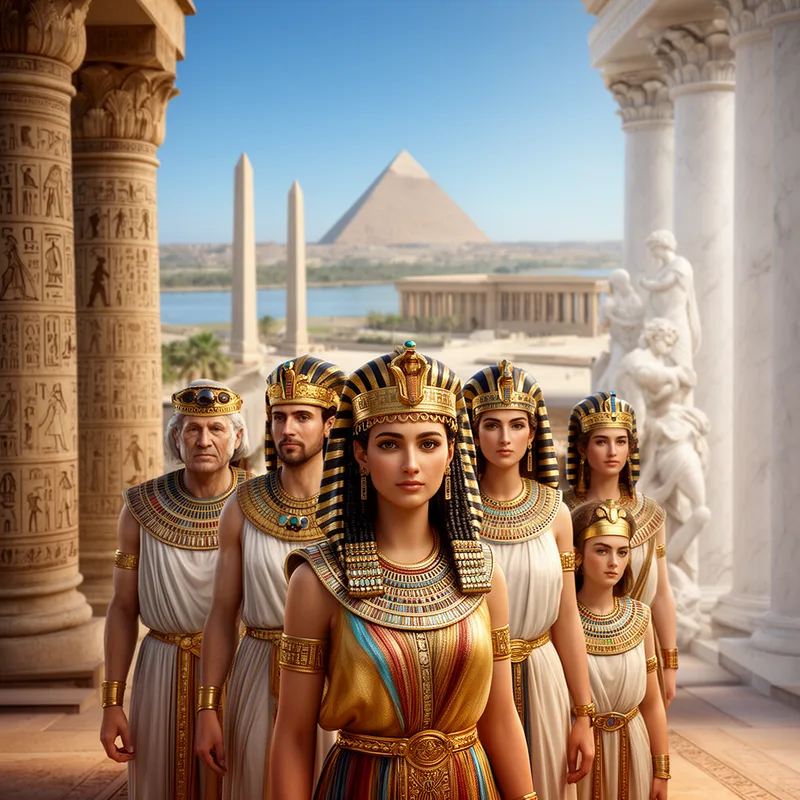
Ptolemaic dynasty
- noun
- /ˌtoʊləˈmeɪɪk ˈdaɪnəsti/
- Thus ended the Ptolemaic dynasty, and with Egypt subdued, the Romans now claimed unopposed dominion over the entire Mediterranean world.
Examples
-
The Ptolemaic dynasty was known for its blend of Greek and Egyptian cultures during its rule in Egypt.
-
The last of the Ptolemaic dynasty, the deaths of Anthony and Cleopatra marked the end of the final civil war of the Roman Republic.
-
The last of the Ptolemaic dynasty, Cleopatra VII's reign, marked the end of ancient Egyptian rule.
-
After the defeat of Cleopatra, the Ptolemaic dynasty came to a dramatic end in 30 BC.
Synonyms

 1
9.9
1
9.9

A Greek-Macedonian royal family who ruled Egypt from 305 BC to 30 BC
Surface Forms
Morphology
Ptolemaic + dynasty
The adjective 'Ptolemaic' denotes relation to Ptolemy (a proper name) and 'dynasty' means a succession of rulers; combining them yields the dynasty associated with Ptolemy. This is a straightforward compositional proper-name + noun construction (common across languages), so a learner who knows both constituents can infer the MWE's meaning.
Etymology
Ptolemaic dynasty takes its name from Ptolemy, a general of Alexander the Great who became king of Egypt and set his family on the throne. So Ptolemaic dynasty means the line of kings and queens from Ptolemy who 'ruled' Egypt until Cleopatra.