
Pterocarpus
- noun
- /ˌtɛrəˈkɑrpəs/
- Specialized
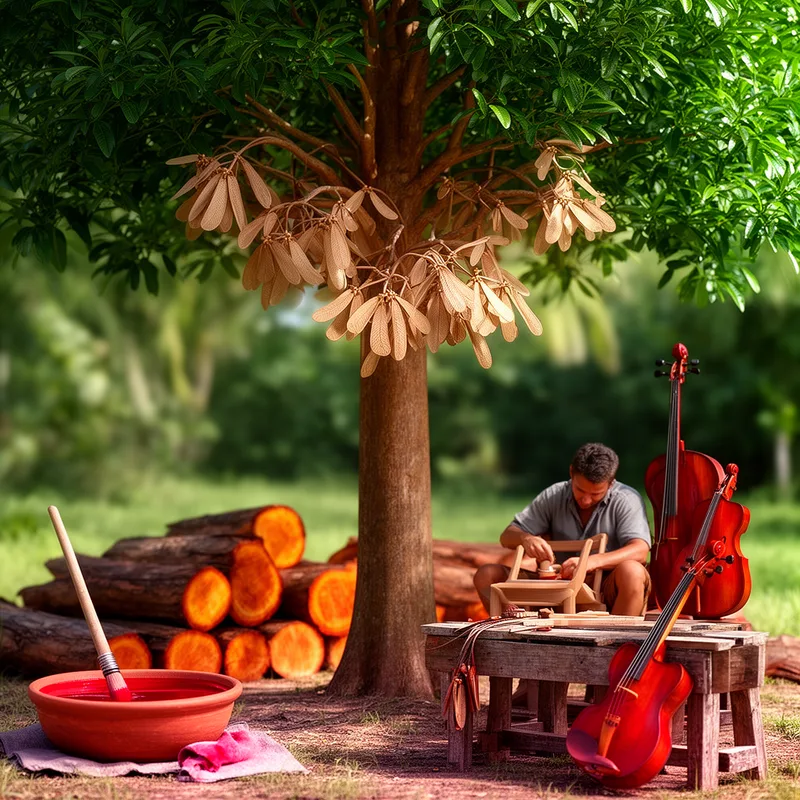
- The wood from Pterocarpus trees is highly valued for making furniture and musical instruments.
Examples
-
Many traditional dyes are derived from the heartwood of Pterocarpus plants.
-
Many craftsmen prefer Pterocarpus wood for its durability.
-
Botanists conducted a study on the seed dispersal mechanisms of Pterocarpus species in West Africa.
-
The Pterocarpus tree grows well in tropical climates.
-
Many traditional dyes are derived from the heartwood of Pterocarpus plants.
-
The wood from Pterocarpus trees is highly valued for making furniture and musical instruments.
-
Botanists conducted a study on the seed dispersal mechanisms of Pterocarpus species in West Africa.
Synonyms

A group of tropical trees and climbers with wide winged seed pods
Compounds
- Specialized
A tree in southern Africa that loses its leaves, has orange yellow flowers, and strong wood often used for furniture

- Specialized
A large tree from Southeast Asia with reddish wood and dark grain

- Specialized
A tropical tree from India and Burma with hard reddish wood used for furniture

- Specialized
A tree from India that makes a sticky sap used as medicine and to make leather
- Specialized
A tree from India and Southeast Asia that has hard dark red wood used for furniture and dye
Surface Forms
Etymology
Pterocarpus comes from Greek parts ptero- meaning 'wing' and -carpus meaning 'fruit', and the ptero- part is the same 'wing' in pterodactyl. So Pterocarpus means 'winged fruit', which helps you remember these trees have broad, winged pods and seeds used for wood and dyes.

