
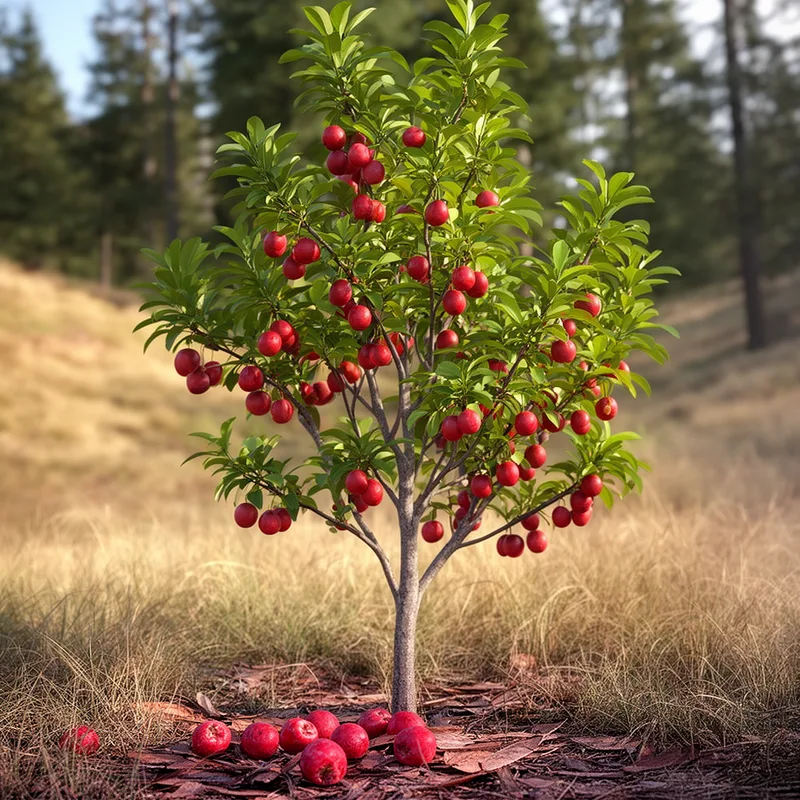
Prunus subcordata
- noun
- Specialized
- Wild Prunus subcordata can often be found growing along forest edges in northern California.
Examples
-
The fruit of Prunus subcordata is considered insipid and not commonly eaten.
-
The Prunus subcordata grows well in coastal areas.
-
Researchers studied the ecological role of Prunus subcordata in the local wildlife habitat.
-
Many gardeners appreciate the Prunus subcordata for its hardiness.
-
Researchers studied the ecological role of Prunus subcordata in the local wildlife habitat.
-
Wild Prunus subcordata can often be found growing along forest edges in northern California.
-
The fruit of Prunus subcordata is considered insipid and not commonly eaten.
Synonyms
A shrub from the Pacific coast of the United States that makes small red fruit that is not very sweet
A small wild bush on the US west coast that has small red fruit often too bland to eat
How Edible


Surface Forms
Morphology
Prunus + subcordata
This is a Latin scientific (binomial) name rather than a compositional English phrase. A B1 learner who knows 'Prunus' might guess it is a genus of trees, but 'subcordata' is not an English word (and its Latin sense is unlikely to be known), so the shrub description cannot be derived from the constituents. Because the overall meaning is tied to a proper taxonomic label and not transparent composition, it is not predictable to learners.
Etymology
Prunus subcordata comes from Latin: Prunus means 'plum' and subcordata means 'somewhat heart-shaped', describing the leaves. So the name paints a simple picture: a plum-like shrub with slightly heart-shaped leaves and small red, not very tasty fruit, which is why scientists use that name today.