

Prunus padus
- noun
- Specialized
 :
cerezo de los pájaros
:
cerezo de los pájaros
- The fragrant blossoms of the Prunus padus attract many bees in early spring.
Examples
-
In the old estate garden, several Prunus padus trees form a shady avenue.
-
Birds feed on the small, bitter fruits produced by the Prunus padus each summer.
-
The Prunus padus blooms beautifully in spring.
-
Many birds are attracted to the Prunus padus tree.
-
In the old estate garden, several Prunus padus trees provide a lovely display of white flowers in spring.
-
The fragrant blossoms of the Prunus padus attract many birds looking for food and shelter.
-
Birds feed on the small, bitter fruits produced by the Prunus padus during the summer months.
Synonyms
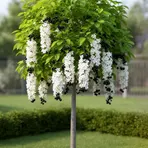
A small European tree that has groups of white flowers and small black fruit

A small European tree with clusters of sweet-smelling white flowers and black fruit eaten by birds

A small European cherry tree with clusters of dark berries
A small wild tree with dark cherries that birds eat
A small wild cherry tree with red or black fruit that birds often eat

A small cherry tree with small berries that birds eat
Surface Forms
Morphology
Prunus + padus
This is a Latin binomial (scientific) name functioning as a taxonomic label rather than an ordinary English compound; even if a learner recognized 'Prunus' as a tree genus, 'padus' is not a meaningful English word and the pair does not compose a predictable everyday meaning. Therefore a B1 learner who knows the constituent items would not be able to infer 'a small European cherry tree (bird cherry)'.
Etymology
Prunus padus comes from old Latin words: Prunus was the Latin word for 'plum' or 'cherry', and padus probably came from the ancient name of a river where the tree grew. So the name shows a small cherry tree by a river and explains why it refers to the bird cherry with small bitter fruits.

