

Priscoan
- noun
- Specialized
- During the Priscoan, conditions on Earth were too harsh for life to develop.
Examples
-
No rocks have been found from the Priscoan eon because Earth's crust was still forming.
-
The Priscoan eon marks the beginning of Earth's history.
-
Some scientists debate whether the Priscoan eon truly existed as a distinct period.
-
Geologists study the Priscoan period to understand early Earth.
-
During the Priscoan, conditions on Earth were too harsh for life to develop.
-
No rocks have been found from the Priscoan eon because Earth's crust was still forming.
-
The Priscoan period represents the time before the oldest known rocks appeared on Earth.
Synonyms
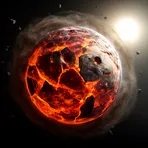
A very early time on Earth from its formation until about 3,800 million years ago with no signs of life
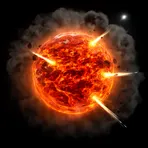
The very earliest time on Earth after it formed, before rocks or life existed
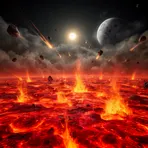
The earliest time in Earth's history from about 4.6 to 4 billion years ago before rocks or life
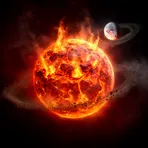
The first time after Earth formed, about 4.6 to 4 billion years ago, before rocks or life
Compounds
- Specialized
A very early time on Earth from its formation until about 3,800 million years ago with no signs of life
Surface Forms
Morphology
Priscoan = prisco + an
Formed from an obscure Latin-derived element 'prisco-' plus the adjectival/noun-forming suffix '-an'; the base element is not a familiar standalone English word, so learners cannot reliably infer the meaning from known English components.
Etymology
Priscoan comes from the Latin root priscus, which means 'ancient' or 'very old', and it shares this idea with the English word pristine. So, Priscoan names the very first, ancient eon of Earth when the planet was just forming and there was no life.

