

Potentilla anserina
- noun
- Specialized
- Gardeners sometimes plant Potentilla anserina as ground cover due to its attractive silver leaves.
Examples
-
The Potentilla anserina thrives in wet meadows and along stream banks in northern climates.
-
Botanists collected samples of Potentilla anserina to study its silvery foliage and creeping roots.
-
The Potentilla anserina thrives in moist, sandy soils.
-
Have you seen the Potentilla anserina blooming this spring?
-
Botanists collected samples of Potentilla anserina to study its silvery foliage and creeping roots.
-
Gardeners sometimes plant Potentilla anserina as ground cover due to its attractive silver leaves.
-
The Potentilla anserina thrives in wet meadows and along stream banks in northern climates.
Synonyms

A low plant that lives many years and people often use as ground cover

A low-growing plant that grows back each year with silvery undersides on its leaves
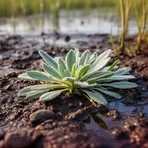
A low plant with silvery leaves that often grows in poor or wet soil
Surface Forms
Morphology
Potentilla + anserina
The genus name 'Potentilla' signals that this is a plant (a genus of herbs/shrubs), so a learner who knows that constituent can infer it refers to a plant species. However, the specific epithet 'anserina' has no dictionary definition provided and botanical Latin names function as labels rather than compositional phrases, so the precise meaning 'silverweed' and the detailed descriptive features are not derivable from the parts. Because only the broad category (a plant) is recoverable but not the specific sense, the MWE is partially but not fully transparent.
Etymology
Potentilla anserina may come from old Latin words. The part Potentilla is the plant group name and the part anserina comes from 'goose' because geese ate it or its leaves look like a goose's foot, and its silvery leaf undersides gave it the common name 'silverweed', so the name fits a low, creeping plant with shiny, silvery leaves.

