

Populus alba
- noun
- Specialized
- The leaves of the Populus alba shimmer in the breeze, revealing their distinctive white undersides.
Examples
-
Many parks in Europe feature rows of Populus alba for their ornamental value and resilience.
-
Botanists studied the drought resistance of Populus alba to inform reforestation efforts.
-
The Populus alba is commonly known as the white poplar.
-
Many parks in Europe feature the Populus alba for its striking appearance.
-
Many parks in Europe feature rows of Populus alba for their ornamental value and resilience.
-
The leaves of the Populus alba shimmer in the breeze, revealing their distinctive white undersides.
-
The Populus alba is commonly known as the white poplar.
Synonyms


 1
9.9
1
9.9
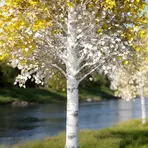
A poplar tree with white bark and leaves that are white underneath
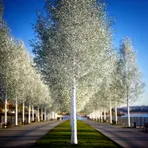
A tree with white bark and silvery leaves often planted for decoration
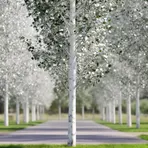
A tall tree with white bark and silvery leaf undersides used for decoration
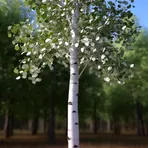
A poplar tree with white bark and pale undersides on its leaves

A tree with smooth white bark and leaves with pale undersides that tremble
Surface Forms
Morphology
Populus + alba
This is a Latin binomial where the first element names the genus (Populus = poplar) and the second is an adjectival epithet (alba = white), so a learner who knows both constituents can directly derive 'white poplar'. Because the name is morphologically compositional and follows a cross-linguistically common taxonomic pattern (alba/albus = 'white' in Latin and visible in many European languages), the meaning is transparent to those who know the parts.
Etymology
Populus alba comes from Latin words: populus meaning 'poplar' and alba meaning 'white'. The name probably refers to the tree's white bark and the pale undersides of its leaves, which look white when the wind turns them, so the name describes the tree you see today.