
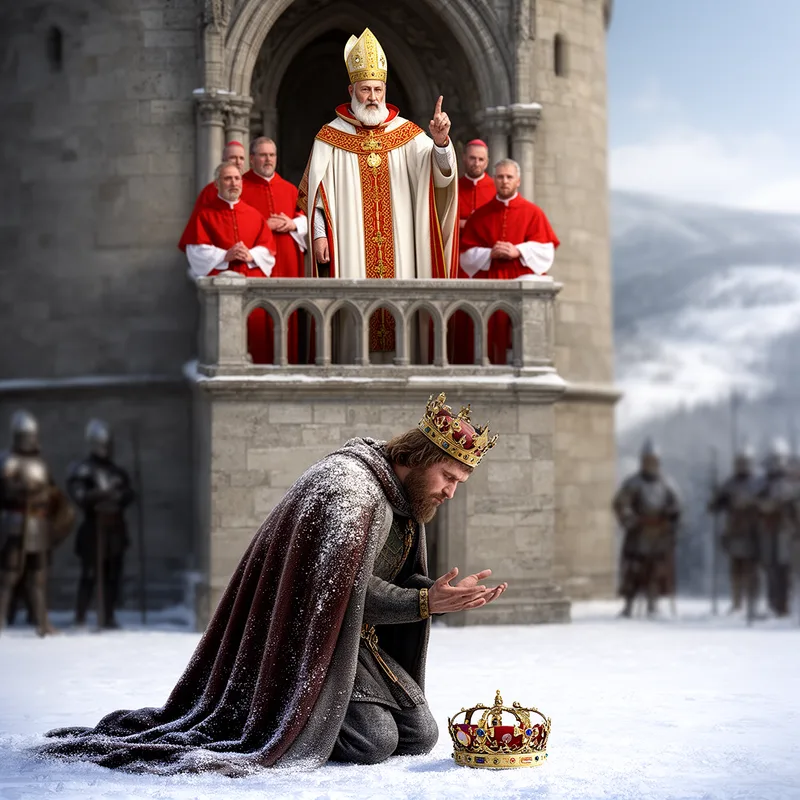
Pope Gregory VII


 1
8.6
- proper noun
- Pope Gregory VII excommunicated Emperor Henry IV during the Investiture Controversy.
Examples
-
The doctrine of papal supremacy was strongly defended by Pope Gregory VII.
-
Pope Gregory VII played a significant role in establishing the authority of the pope over kings and emperors.
-
Historians regard Pope Gregory VII as a key figure in the reform of the medieval church.
-
Pope Gregory VII reformed the church during his papacy.
-
Did Pope Gregory VII really excommunicate Henry IV?
-
During his papacy, Pope Gregory VII initiated reforms that transformed the Roman Catholic Church.
-
Pope Gregory VII's actions during the Investiture Controversy highlighted the struggle between church and state.
Synonyms
 1
8.8
An Italian Catholic church leader from 1020 to 1085 who argued that the pope should have power over kings
Surface Forms
Morphology
The phrase is compositionally transparent: 'Pope' (the office) + 'Gregory' (a personal name) + 'VII' (the ordinal 'seven') yields the identity 'Gregory the Seventh who is/was pope', which a B1 learner who knows the parts can infer. While detailed historical facts (dates, actions) require extra knowledge, the referential meaning as the specific pope is directly derivable and follows cross-linguistic naming conventions.
Etymology
Pope Gregory VII was the pope in the 11th century who fought with kings to make the church stronger. He once forced Emperor Henry IV to stand in the snow at Canossa to beg for forgiveness and later 'excommunicated' him, which means he removed him from the church, so Gregory is remembered as a pope who claimed power even over kings.