
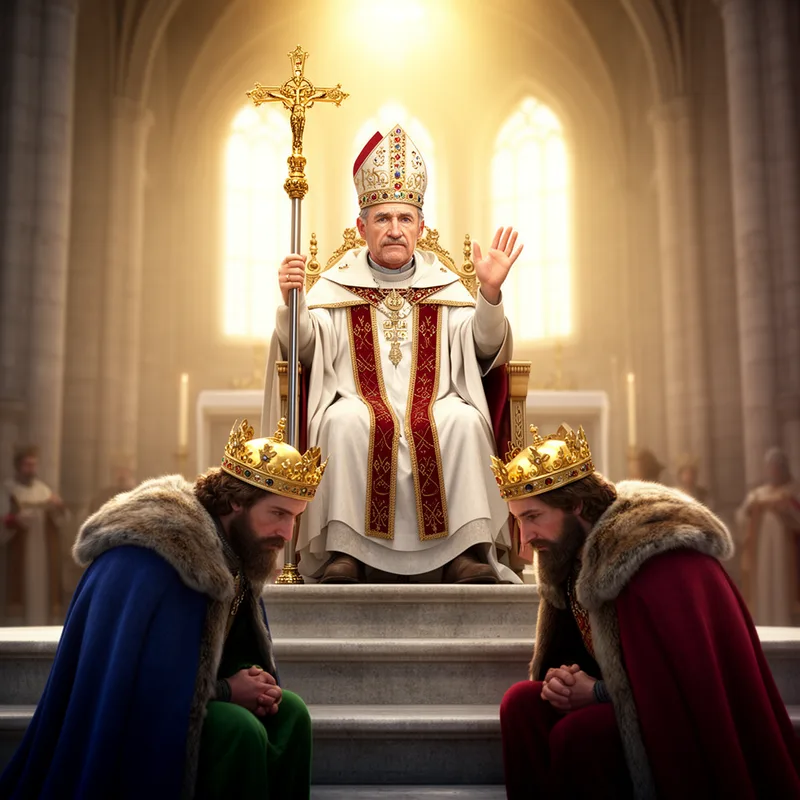
Gregory VII


 1
8.8
- proper noun
- Pope Gregory VII was a pivotal figure in Church history.
Examples
-
Historians often discuss Gregory VII when analyzing the Investiture Controversy.
-
Did Gregory VII really excommunicate King Henry IV?
-
Gregory VII played a key role in the medieval struggle between the papacy and secular rulers.
-
The reforms of Gregory VII had a lasting impact on the structure of the Catholic Church.
-
Gregory VII is often remembered for championing the independence of the Church from secular authority.
-
The legacy of Gregory VII continues to influence discussions on the relationship between religion and politics.
-
Many scholars regard Gregory VII as a reformer who transformed the papacy into a more powerful institution.
Synonyms
 1
8.6
A pope of the Catholic Church from 1073 to 1085 who defended the pope's power over kings
Surface Forms
Morphology
Gregory + VII
The form 'Gregory VII' clearly signals a person named Gregory with the regnal/ordinal number seven because 'Gregory' is a name and 'VII' is the Roman numeral for seven, a compositional pattern learners can recognize. However, the detailed meaning — that this particular Gregory was an Italian pope who asserted papal authority and initiated reforms — cannot be derived from the constituents alone and requires specific historical knowledge, so the expression is only partially transparent.
Etymology
Gregory VII was a pope in the 1000s who insisted that the Church, not kings, should 'choose bishops' and run its own affairs. One famous image is of a king standing in the snow asking the pope's forgiveness, so Gregory VII is remembered as the pope who fought rulers and made the papacy stronger.