
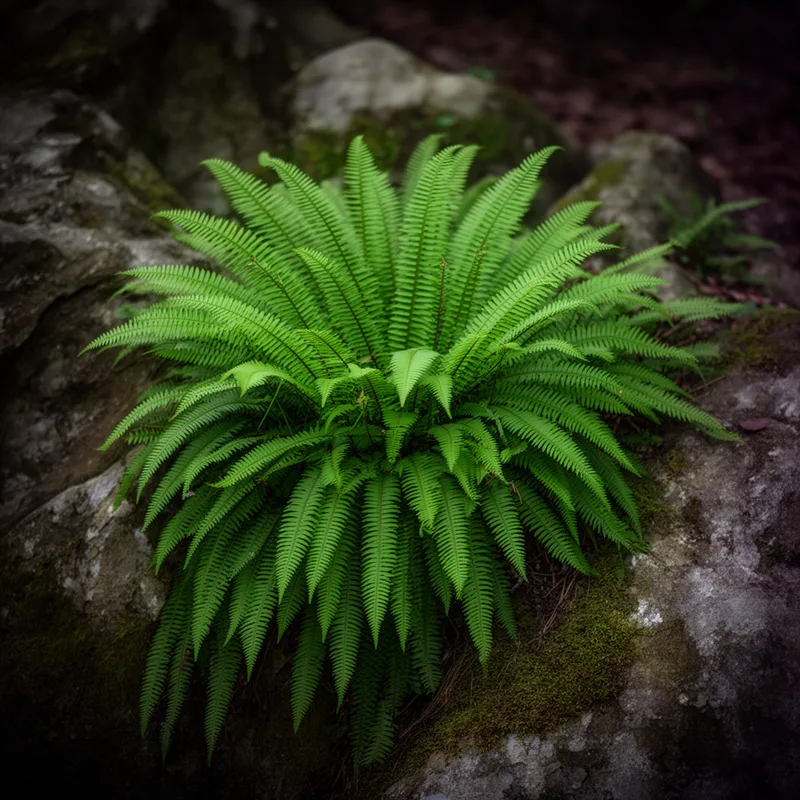
Polypodium vulgare
- noun
- Specialized
- The fronds of Polypodium vulgare have a distinctive, feather-like appearance.
Examples
-
Gardeners often use Polypodium vulgare for ground cover in shaded areas.
-
The Polypodium vulgare thrives in moist, shaded areas.
-
Polypodium vulgare thrives in rocky or shady woodland environments.
-
Have you seen the Polypodium vulgare in the garden?
-
Polypodium vulgare is commonly found in damp, shady forests, making it a popular choice for natural gardens.
-
The Polypodium vulgare adds lush greenery to shaded areas with its unique, divided fronds.
-
In many regions, Polypodium vulgare can be seen growing along rocky slopes and under trees.
Synonyms

A small fern with spreading roots and divided leaves that grows on rocks and tree trunks in shady damp places
Surface Forms
Morphology
Polypodium + vulgare
The binomial name combines the genus 'Polypodium' (a type of fern) with the epithet 'vulgare' (Latin for 'common'), so a learner who knows both constituents can infer it refers to the common species of Polypodium. Botanical Latin names are compositional in this way, making the overall meaning derivable from the parts rather than idiomatic or metaphorical.
Etymology
Polypodium vulgare comes from old Greek and Latin words. Here poly means 'many' and podion means 'little feet', because the fern sends out many creeping stems that look like tiny feet, and vulgare means 'common', so the name pictures the 'common' fern with many little 'feet'.

