
Polanisia dodecandra
- noun
- Specialized
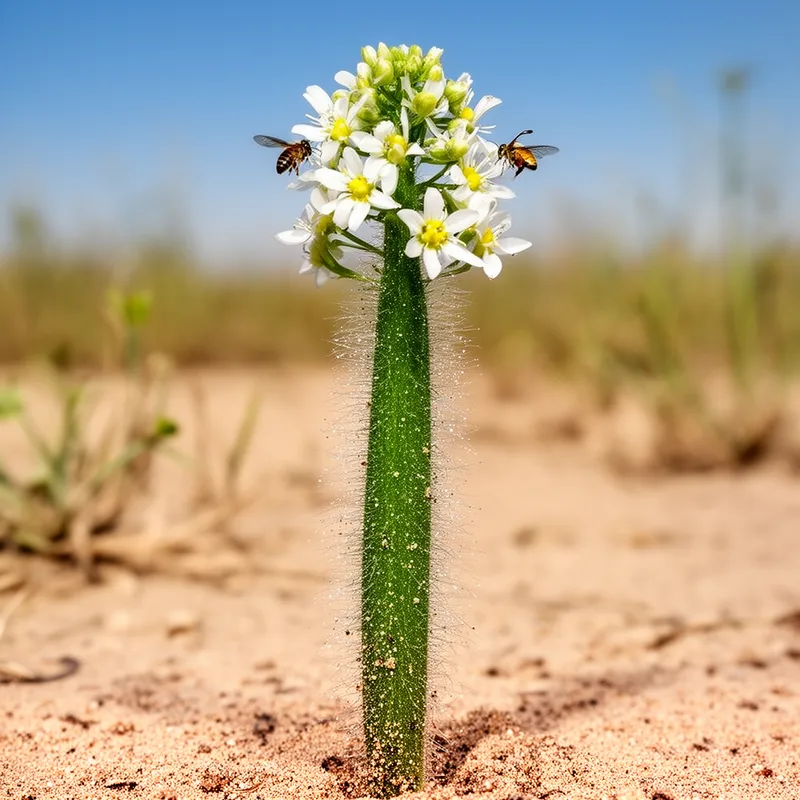
- The strong scent of Polanisia dodecandra helps attract pollinators to its small, white flowers.
Examples
-
Polanisia dodecandra is commonly found in sandy soils across the southern United States.
-
Botanists often study Polanisia dodecandra to understand adaptations to dry environments.
-
The Polanisia dodecandra plant thrives in warm climates.
-
Many gardeners appreciate Polanisia dodecandra for its strong scent.
-
The strong scent of Polanisia dodecandra helps attract pollinators to its small, white flowers.
-
Polanisia dodecandra is commonly found in sandy soils across the southern United States.
-
Many gardeners appreciate Polanisia dodecandra for its strong scent.
Synonyms

A plant with sticky, hairy leaves and a strong smell
Surface Forms
Morphology
Polanisia + dodecandra
This is a scientific Latin binomial rather than a compositional English phrase: the second element 'dodecandra' is not an ordinary English word (dictionary not found) and its Greek/Latin roots are unlikely to be known by a B1 learner. Knowing 'Polanisia' as a genus label does not let a learner infer the species' meaning or properties, so the overall name's meaning (the specific herb) cannot be derived from the constituents.
Etymology
Polanisia dodecandra may get its name from old Greek words that describe the flower: dodecandra means 'twelve' and refers to the about twelve little sticks in each flower that hold pollen. The full name matches the plant's strong smell and many sticky hairs, and that is why people also call it 'redwhisker clammyweed' today.

