
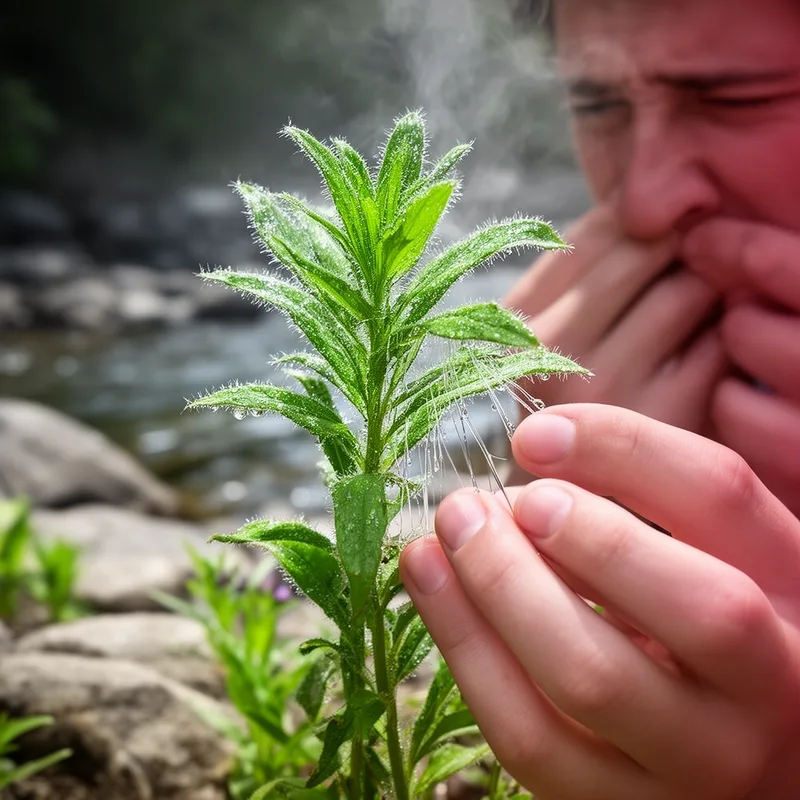
clammyweed
- noun
- US
- The clammyweed releases a pungent odor when touched.
Examples
-
Gardeners sometimes remove clammyweed because of its sticky leaves.
-
While hiking, they discovered a patch of clammyweed with its unique hair-covered surface.
-
While hiking, they found a patch of clammyweed growing near the riverbank.
-
The clammyweed has a very strong scent.
-
Many people dislike the smell of clammyweed.
-
Gardeners sometimes remove clammyweed because its sticky leaves can interfere with other plants.
-
The clammyweed releases a pungent odor when its leaves are crushed.
Synonyms

A strong-smelling plant with sticky hairs and small white flowers from the southern United States
A strong-smelling plant in the southern United States with sticky hairs
Surface Forms
Morphology
Etymology
Clammyweed combines clammy ('sticky' or 'damp') and weed ('wild plant'), so the name simply tells you it is a sticky wild herb. That's why clammyweed is known for leaves covered in tiny hairs that feel sticky and for a strong smell when the plant is touched.

