
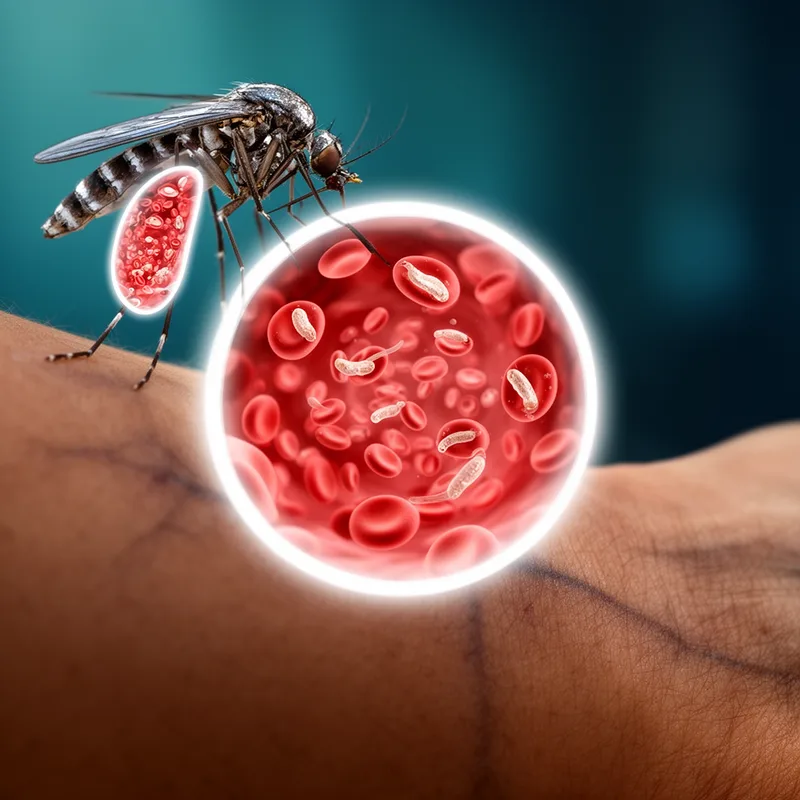
Plasmodium
 1
9.2
1
9.2

- noun
- /plæzˈmoʊdiəm/
- Specialized
- The parasite is known as a Plasmodium, and they're four species of Plasmodium that cause human malaria.
- Plasmodium falciparum
- Plasmodium infection
- Plasmodium malaria
Examples
-
The malaria parasite Plasmodium falciparum is responsible for the most severe form of malaria in humans.
-
Human infection is caused by protozoans Plasmodium falciparum (the most common and virulent strain), P. malariae, P. vivax, or P. ovale.
Academic text (2004) -
Here is Plasmodium hiding in an infected red blood cell.
-
The development of a safe and effective vaccine against Plasmodium falciparum malaria remains a major public health objective.
Academic text (2000) -
The final dataset included 354 observations of individual adults who tested positive or negative for Plasmodium spp.
Academic text (2012) -
Plasmodium falciparum strains resistant to chloroquine, Fansidar, and mefloquine are widespread.
Academic text (2014) -
Using a hospital-based survey of women giving birth and an antenatal survey, we assessed the prevalence rates of Plasmodium infection in pregnant women in two malaria-endemic areas of Bolivia.
Academic text (2013) -
Scientists study various species of Plasmodium to develop better treatments for malaria.
-
Infected individuals may have detectable levels of Plasmodium in their blood during a malaria infection.
Synonyms
 1
4.1
1
4.1
A very small single cell that lives in human blood, spreads by mosquito bites and causes malaria

 1
8.4
1
8.4
A parasite made of one cell that causes the most severe kind of malaria in humans
A one-celled parasite that causes a form of malaria in people with returning fevers
Compounds
- Specialized
1
8.4
A parasite made of one cell that causes the most severe kind of malaria in humans
- Specialized
A one-celled parasite that causes a form of malaria in people with returning fevers
Surface Forms
Etymology
Plasmodium comes from the Greek root plasma, meaning 'something formed', with the small ending -idium meaning 'little'. The name paints a picture of a tiny formed blob, which fits these small parasites that change shape in the blood and cause malaria.