
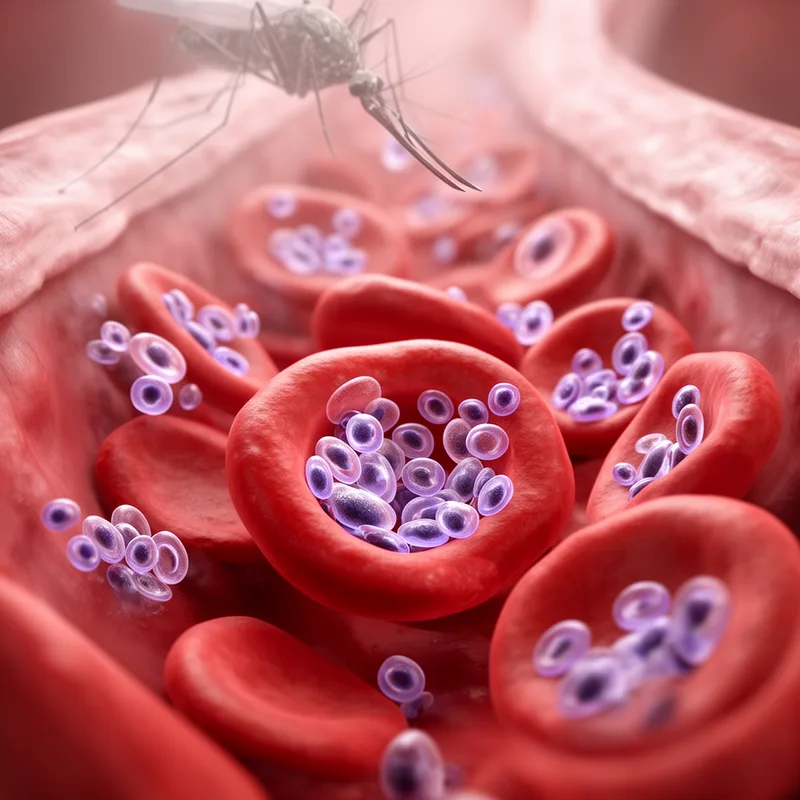
Plasmodiidae
- noun
- /plæzˈmoʊdiˌiːdə/
- Specialized
- The Plasmodiidae family comprises several species responsible for malaria in humans and animals.
Examples
-
One member of the Plasmodiidae family, Plasmodium falciparum, is especially dangerous to human health.
-
Researchers are studying the life cycle of Plasmodiidae to develop better treatments for malaria.
-
The Plasmodiidae family includes several species that cause malaria.
-
Research on Plasmodiidae has increased due to malaria outbreaks.
-
One member of the Plasmodiidae family, Plasmodium falciparum, is especially dangerous to human health.
-
Researchers are studying the life cycle of Plasmodiidae to develop better treatments for malaria.
-
The Plasmodiidae family comprises several species responsible for malaria in humans and animals.
Synonyms
A group of tiny parasites that cause malaria and spread to people by mosquito bites
Compounds
- Specialized
A group of tiny parasites that cause malaria and spread to people by mosquito bites
Surface Forms
Morphology
Plasmodiidae = Plasmodium (opaque) = plasmodi + idae
The suffix '-idae' is a specialized taxonomic marker (family) from Latin/Greek and is not a productive, commonly-known English derivation for average learners, so the meaning is not easily inferred.
Etymology
Plasmodiidae comes from the root plasma, a Greek word meaning 'something formed', and the scientific ending -idae, which means 'family'. Think of the familiar English plasma in blood: these parasites 'form' and grow inside blood cells, so the name shows both their forming nature and that they are a family of related parasites.

