
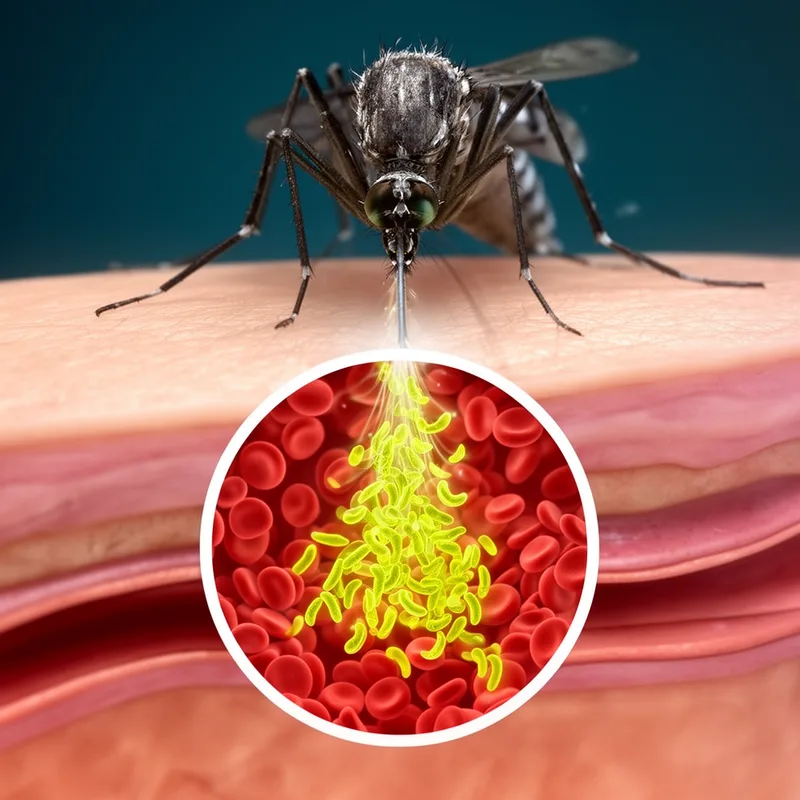
family Plasmodiidae
- noun
- /ˈfæmɪli plæzˈmɒdiˌiːdeɪ/
- Specialized
- The family Plasmodiidae includes the organisms responsible for causing malaria in humans.
Examples
-
Scientists study the family Plasmodiidae to understand how malaria spreads and how to prevent infection.
-
Members of the family Plasmodiidae are responsible for the transmission of malaria through mosquito bites.
-
Members of the family Plasmodiidae are transmitted to humans by the bite of infected mosquitoes.
-
The family Plasmodiidae causes malaria.
-
The family Plasmodiidae is important.
-
The family Plasmodiidae includes several species that can lead to severe illness in humans.
-
Research on the family Plasmodiidae has revealed new ways to combat malaria effectively.
Synonyms
A family of tiny one-celled parasites that cause malaria
Surface Forms
Morphology
The meaning is directly compositional: 'family' as a taxonomic grouping combined with the taxon name 'Plasmodiidae' yields 'the taxonomic family called Plasmodiidae'. This is a standard scientific naming pattern (family + name) found across languages, so a B1 learner who knows both constituents would readily infer the meaning.
Etymology
Family Plasmodiidae comes from how scientists group living things: family names a set of related species and Plasmodiidae is the group name for a set of tiny parasites. So, family Plasmodiidae means the group of parasites that includes the ones that cause 'malaria'.

