
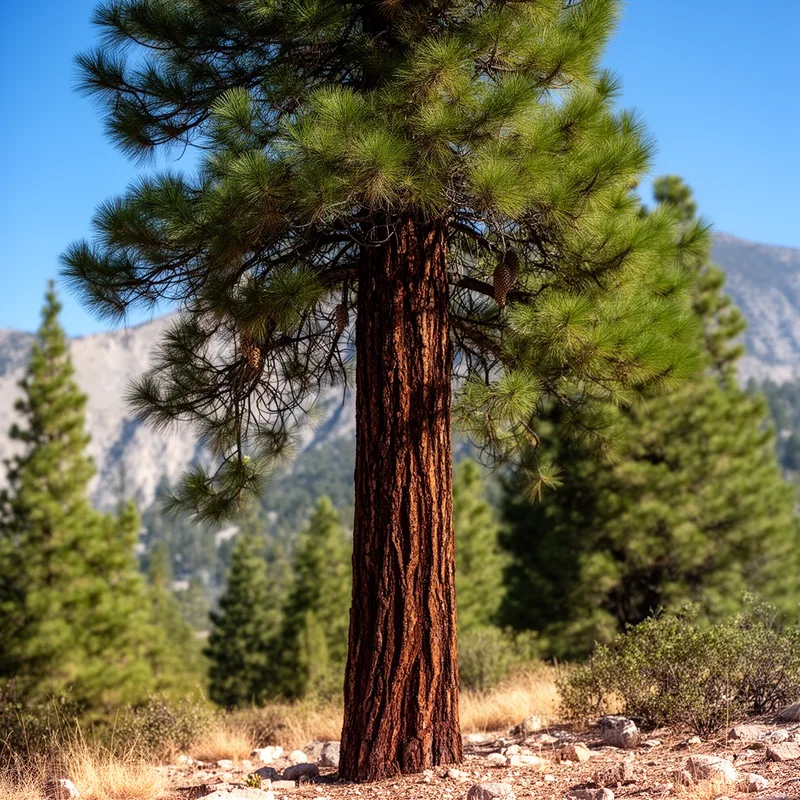
Pinus strobiformis
- noun
- Specialized
- The bark of mature Pinus strobiformis trees is dark brown and deeply furrowed.
Examples
-
The Pinus strobiformis thrives in dry, mountainous regions.
-
The Pinus strobiformis thrives in the mountainous regions of northwestern Mexico.
-
Foresters study the growth patterns of Pinus strobiformis to support conservation efforts.
-
In Mexico, the Pinus strobiformis is commonly found in forests.
-
The Pinus strobiformis is known for its dark brown, furrowed bark and adaptability to dry climates.
-
In the Sierra Madre mountains, the Pinus strobiformis provides habitat for various wildlife species.
-
Many conservation programs focus on protecting the Pinus strobiformis due to its ecological importance in northwestern Mexico.
Synonyms

A medium-sized pine tree from northwest Mexico with dark, rough bark when mature
How Big


Surface Forms
Morphology
Pinus + strobiformis
The element 'Pinus' clearly signals the genus (pine), so a learner would recognise it as a type of pine tree; however the species epithet 'strobiformis' is a Latin technical label (not found in the provided dictionary) and does not yield the specific meaning (size, bark, native range) to a B1 learner. Binomial names thus allow partial identification of category but are not fully compositional for the detailed sense, making the overall expression only partly transparent.
Etymology
Pinus strobiformis may come from Latin and Greek roots: Pinus means 'pine' and strobiformis means 'cone-shaped'. So the name simply tells you it is a pine that is known for its cone-like form.