
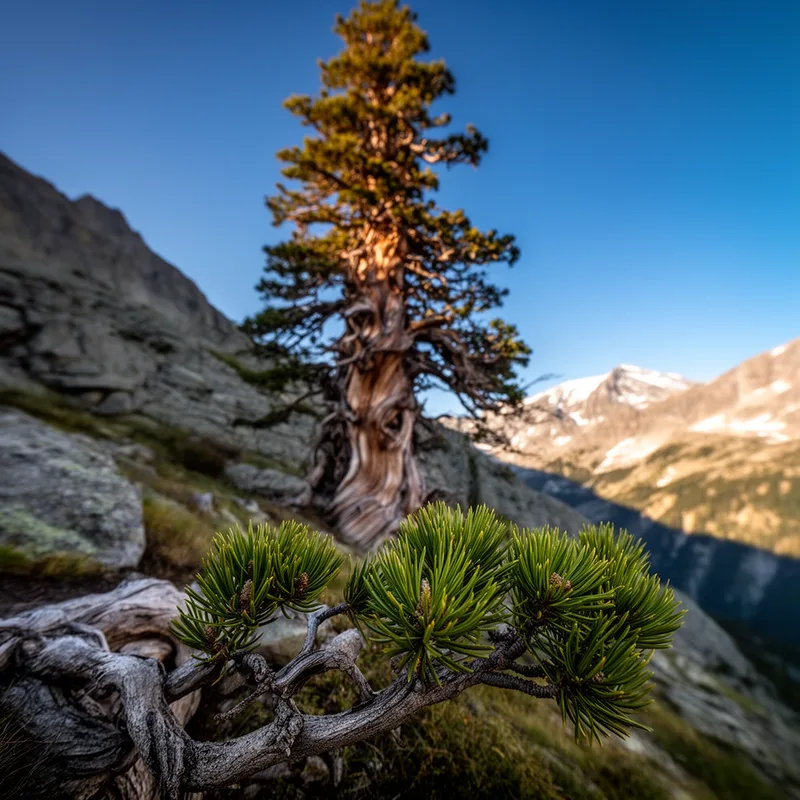
Pinus aristata
- noun
- /ˈpaɪnəs əˈrɪstə/
- Specialized
- The ancient Pinus aristata trees in the Rocky Mountains are renowned for their remarkable age.
Examples
-
Scientists study Pinus aristata to understand how these trees survive harsh conditions over millennia.
-
Many gardeners appreciate the Pinus aristata for its beauty.
-
Hikers were awestruck by a massive Pinus aristata growing along the mountain trail.
-
The Pinus aristata is a remarkable species.
-
Hikers were awestruck by a massive Pinus aristata growing along the mountain trail.
-
Scientists study Pinus aristata to understand how these trees survive harsh conditions over millennia.
-
The ancient Pinus aristata trees in the Rocky Mountains are renowned for their remarkable age.
Synonyms

 1
8.6
1
8.6

A small pine tree that grows very slowly and lives for thousands of years
A small slow-growing pine tree from the Rocky Mountains that can live for thousands of years
Surface Forms
Morphology
Pinus + aristata
This is a Latin binomial name: 'Pinus' clearly marks the genus (pines), so a learner who recognizes that naming convention can infer it refers to a type of pine. However 'aristata' is a Latin species epithet (not a common English word) and does not transparently convey the specific botanical properties, so the full meaning is not derivable from the parts.
Etymology
Pinus aristata comes from Latin words: Pinus means 'pine' and aristata means 'bristly' or 'with little points'. That's why the name matches this small mountain pine with short, stiff needles and spiky cones.