

Pinus albicaulis
- noun
- /ˈpaɪnəs ælˈbɪkɔɪlɪs/
- Specialized
- You can identify Pinus albicaulis by its distinctive white bark and clusters of five needles.
Examples
-
Many conservationists are working to protect Pinus albicaulis from diseases and climate change.
-
The Pinus albicaulis is vital for high mountain ecosystems, providing food for numerous animals.
-
The Pinus albicaulis grows in high mountain regions.
-
Did you know that Pinus albicaulis can live for over a thousand years?
-
The Pinus albicaulis is an important species for wildlife, as its seeds provide nourishment for birds and small mammals.
-
In many national parks, the Pinus albicaulis serves as a crucial part of the ecosystem, supporting various forms of life.
-
You will often see Pinus albicaulis growing in rocky, mountainous areas where few other trees can survive.
Synonyms
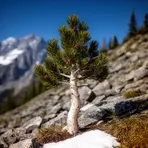
A small pine tree with smooth pale bark that grows high in western North American mountains

A small pine tree with smooth white bark that grows in western North American mountains
Surface Forms
Morphology
Pinus + albicaulis
This is a Latin binomial: Pinus is clearly a pine genus, but the species epithet 'albicaulis' is not an English word and has no dictionary gloss here. Any inference (e.g. ‘white‑stemmed’ or ‘whitebark’ pine) depends on knowledge of Latin roots and taxonomic naming conventions, so the connection is partial and not reliably derivable by a B1 learner.
Etymology
Pinus albicaulis comes from Latin words: Pinus means 'pine' and albicaulis means 'white stem' or 'white trunk', because this tree often has pale, almost white bark. So the name tells you about the tree's pale bark and helps you remember it.

