
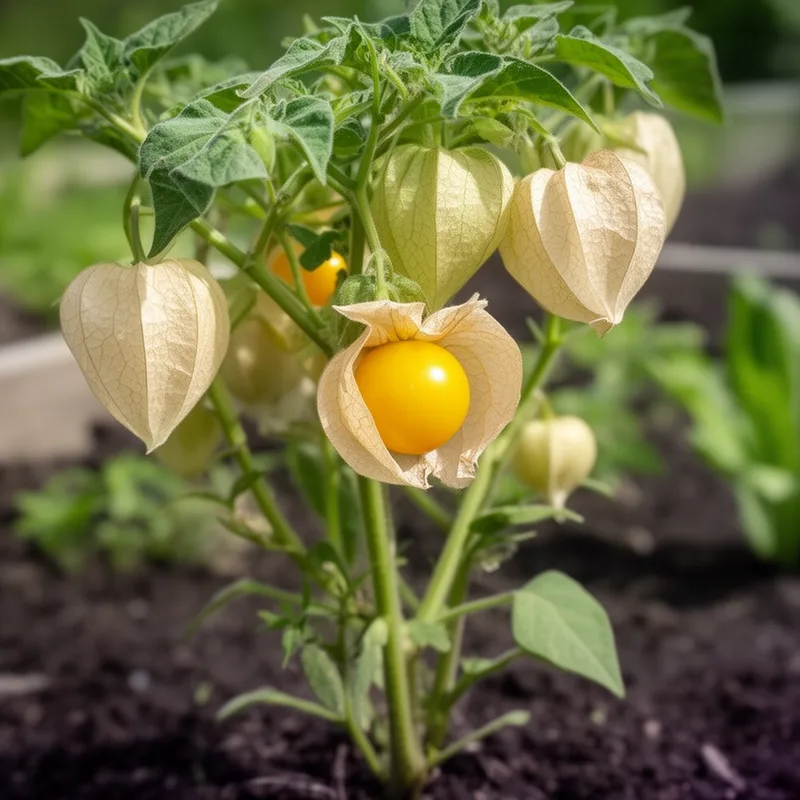
Physalis pubescens
- noun
- /faɪˈseɪlɪs pjuˈbɛsɛnz/
- Specialized
- He studied the unique husk that surrounds the fruit of Physalis pubescens.
Examples
-
Many people enjoy the sweet taste of Physalis pubescens berries.
-
The Physalis pubescens added a splash of color to her summer garden.
-
Chefs sometimes use Physalis pubescens berries as a garnish for desserts.
-
The Physalis pubescens plant is often found in gardens.
-
Chefs sometimes use Physalis pubescens berries as a garnish for desserts.
-
Many people enjoy the sweet taste of Physalis pubescens berries.
-
The Physalis pubescens plant is often grown for decoration in gardens.
Synonyms

A small garden plant with round yellow berries inside a papery husk

A small plant that makes sweet yellow fruits inside a paper husk

A small plant that produces sweet edible yellow fruits inside a thin paper husk
Surface Forms
Morphology
Physalis + pubescens
This is a Latin binomial formed from the genus name 'Physalis' (a plant genus) plus the specific epithet 'pubescens' which typically means 'hairy' or 'pubescent'; if a learner knew both constituents and the convention of botanical names they could infer it is a Physalis species characterized by hairiness. However, 'pubescens' is a specialized Latin descriptor unfamiliar to most B1 learners and botanical naming conventions are not general knowledge, so the overall meaning is only partially transparent.
Etymology
Physalis pubescens comes from old Greek and Latin words: physalis means a small 'bladder' and pubescens means 'hairy'. The name fits because each berry sits inside a paper, bladder-like husk and the plant often has tiny hairs, so the words describe what the plant looks like today.

